

Tuenti was a social network founded in Spain by Félix Ruiz, Joaquín Ayuso, and Adeyemi Ajao in late 2006. Zaryn Dentzel and Kenny Bentley would later join the team. Its success was so immense that it eventually generated more traffic than Google and Facebook combined. It made front-page headlines across major media outlets when Telefónica acquired it for 70 million euros, making it one of the country’s main corporate success stories.
Adeyemi Ajao was born in Madrid, Spain, to a Nigerian father, one of his country’s first engineers, and a Spanish mother. He spent his childhood in Mijas, Málaga, Spain. In 2005, during his final year of university, Adeyemi was on an exchange program at Emory University in Atlanta, USA. As Adeyemi himself recalls, someone introduced him to Facebook for the first time during a Halloween party. The following day, he called Félix Ruiz Hernández, a childhood friend, to tell him how intrigued he was by Facebook and suggested that launching a similar platform in Spain could be a great business opportunity. He also pitched the idea to two university classmates (Javier López Arangüena and José Abad), who helped him draft the initial concepts for the business plan around that time.
When Adeyemi returned to Marbella (Málaga, Spain) that Christmas, he met with Félix again to discuss the initiative, and they agreed to launch the project. In Madrid, Spain, Adeyemi met with his friend Joaquín Ayuso de Paul (son of the then Managing Director of Grupo Ferrovial), whom he had met at university, and Joaquín also joined the venture. “The idea was for Joaquín to handle coding, Adeyemi to handle structure, and myself to take charge of marketing“, explains Félix Ruiz.
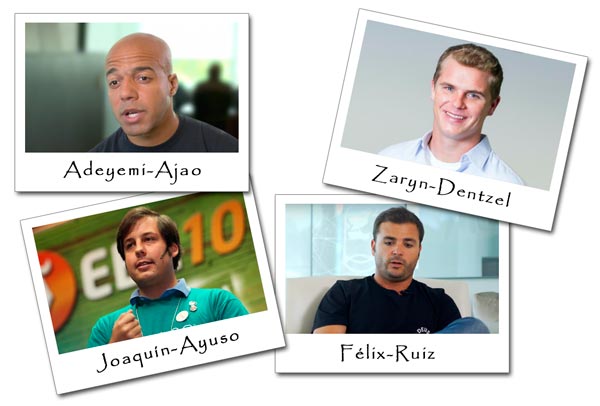
According to Adeyemi, their first step was building a prototype. Joaquín Ayuso handled all the programming while Adeyemi designed the interface. They launched the project using friends-and-family seed capital. They initially pitched it at their university, ICADE in Madrid, Spain (the business school of Universidad Pontificia Comillas), but the main initial breakthrough came from Félix Ruiz, who led the promotional efforts across the Costa del Sol. Highly outgoing and a natural PR strategist, Félix helped secure their first 5,000 users across Málaga, Spain, and Madrid, Spain.
According to Joaquín Ayuso, during Easter 2006 in Marbella, Spain, they ran into Zaryn Dentzel, a friend vacationing there, and invited him to join the project. Zaryn initially declined, as he intended to return to the United States to continue working on Essembly, a social network designed to build private forums for users sharing political affinities.
Company Incorporation
In April 2006, Adeyemi Ajao (as CEO), Félix Ruiz (as Chief Marketing Officer), and Joaquín Ayuso (as Chief Technology Officer or CTO) incorporated the company in Madrid, Spain, under the name Whoiswho Technologies SL (wiw.es). In the Mercantile Registry, they defined its corporate purpose as: “The collection of personal data through an Internet website in order to, with the consent of the data subjects, process such data for advertising purposes and, where applicable, transfer it to third parties for identical purposes”. Adeyemi Ajao appeared as Whoiswho’s founding chairman.
Adeyemi Ajao recalled that period in an interview with the newspaper ABC: “We couldn’t even lease an office because banks kept asking why a website would ever need a physical space”. He also remembered that the early days were far from easy: “We faced daily regulatory hurdles, and our servers were constantly overflowing because the hosting provider simply didn’t believe our growth projections… It was pure chaos”.
Interestingly, although the initial prototype was built using ASP and Access (Microsoft), once they realized the licensing costs for SQL Server and IIS (Microsoft), they decided to migrate the project to PHP (open-source software), which was far better suited for this type of platform.

The company’s first two major angel investors were Francisco Ortiz, whom they knew from Marbella, Spain, and Carlos Dexeus, the father of one of Adeyemi Ajao’s university classmates. After the first eight or nine months of non-stop work among the three co-founders, they decided to raise a seed round. They secured half a million euros from investors including Bernardo Hernández, co-founder of Idealista (a benchmark online real estate classifieds platform in Spain) and former professor of Ajao at ICADE, Fran Ortiz von Bismarck (a friend from Marbella, Spain), and Rodolfo Carpentier (from the venture builder/incubator DAD), among others.
While Adeyemi Ajao was leading the venture, he decided a few months later to leave and take a full-time role at McKinsey & Company (a management consulting firm). This created a leadership void, leading the initial investors in August 2006 to appoint Antonio Robert, formerly of eBay Spain, as the new CEO. For trademark reasons, they could no longer use the name Whoiswho, leading to the proposal of “Tuenti” as the new brand name. Tuenti played on the word “twenty” in English, as twenty-somethings were the platform’s core target audience.
The new CEO proved not to be a fit, leaving the venture in December 2006. Knowing that Zaryn was working on a similar project in the United States, the team decided to reach out to him once again. Initially, Zaryn agreed to assist them as a consultant for one month. However, once on-site, Adeyemi Ajao, Félix Ruiz, Joaquín Ayuso, and investor Bernardo Hernández persuaded him to take the helm as CEO.
The Arrival of Zaryn Dentzel
Zaryn Dentzel grew up in Santa Barbara, California, in a home with hippie parents, his mother was a painter and his father built carousels. At age 15, Zaryn was sent to Spain on an exchange program to learn Spanish. He ended up in a small town in Extremadura called Cabeza de Buey (Spain). After about five months there, he moved to Mijas (Málaga, Spain) on the Costa del Sol, staying at Adeyemi Ajao’s house. Adeyemi’s parents hosted him for free for another four or five months, fostering a bond where Zaryn and Adeyemi felt like brothers. During that time, he also met Félix Ruiz, who was Adeyemi’s school friend.
Zaryn Dentzel offers a slightly different version of these early months. He claims that following the failure of his previous venture, Essembly, a social network he co-founded, he came up with the concept for Tuenti. He felt the U.S. social media market was overly saturated and that executing the venture in Spain offered a higher probability of success.
Zaryn was 23 years old at the time. As he recounts in his autobiography (The Future Is Yours to Decide), he reached out to his friends Adeyemi Ajao and Félix Ruiz to launch Tuenti. Zaryn also claims he coined the name Tuenti as a portmanteau of the Spanish phrase “tú entidad” (your identity). However, official corporate filings show that Zaryn Dentzel’s name did not appear in the Mercantile Registry until April 2007 (as a Board Director). By that time, the company had already rebranded to Tuenti Technologies SL.
Regardless of the conflicting origin accounts, Tuenti’s subsequent success was driven primarily by Zaryn Dentzel’s leadership, Félix Ruiz’s commercial drive, and the technical stability brought by Kenny Bentley, a developer Zaryn brought onboard. Kenny had previously worked as a developer at Essembly and brought extensive expertise in scaling such environments. Bernardo Hernández’s role was equally critical, not only as a key angel investor in his personal capacity, but also through his active hands-on involvement at pivotal moments in the company’s trajectory.
The Early Years
Félix Ruiz was tasked with user acquisition, strategically targeting university students. The team operated on the principle that a more homogenous user base shared common interests, driving higher platform engagement. They actively promoted Tuenti across university cafeterias between classes, hosted presentations at student halls, and engaged target audiences at popular nightlife venues. Félix’s effectiveness in these activation campaigns was so remarkable that user traffic in targeted cities surged the day following each event.
In the summer of 2007, during a trip to Bilbao, Spain, several Tuenti employees and close associates were involved in a catastrophic traffic accident that tragically claimed three lives. While Zaryn was unharmed, Kenny Bentley sustained injuries, and several team members required weeks of hospitalization. This tragedy nearly caused the venture to collapse in its infancy.
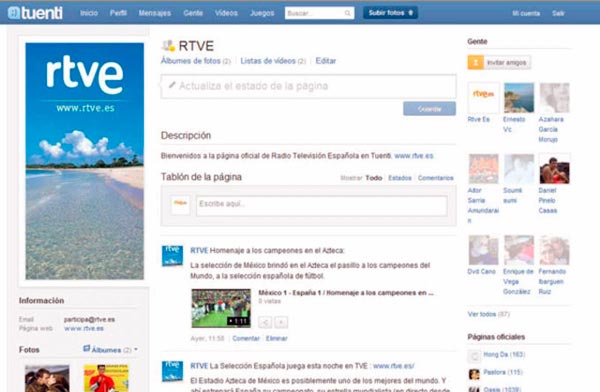
Tuenti was designed specifically for a younger demographic. User profiles featured a personal publishing space for text, photos, and videos, functioning like a blog. Additionally, profiles contained a public wall where connected friends could post personal messages. The platform integrated features such as event planning, instant messaging, and video conferencing. Access was strictly invite-only, maintaining an exclusive, closed-network model. A core competitive advantage was its strict privacy model, which prevented content indexing by search engines, creating a digital space inaccessible to parents and unsearchable on Google.

While Tuenti initially gained traction among university students, it rapidly expanded across the 15-to-25 demographic. Within two years, it became Spain’s leading social network, surpassing the combined traffic of Facebook and Google nationwide. By 2010, it ranked as the sixth most visited website in Spain (according to Alexa Internet), and by 2011, approximately 15% of all Spanish internet traffic routed through Tuenti.
The business model relied on digital advertising revenue; however, Tuenti deferred monetization until late 2008. According to Zaryn, this was a strategic choice to avoid invasive traditional banner ads in favor of native, value-add formats, such as sponsored events, brand promotions, and interactive user campaigns.
In 2008, despite maintaining a lean team of 15 employees, escalating server infrastructure costs prior to revenue stabilization brought the company to the brink of insolvency. The venture was rescued through a €500,000 bridge loan, followed by a major investment round from venture capital firm Qualitas Equity Partners, which injected €9 million in exchange for a 17% equity stake. Qualitas committed an additional €9 million in March 2010, increasing its stake to 30%, while the co-founders retained a 70% controlling majority.
Driven by the imperative to diversify revenue streams, the team launched several new verticals, including Tuenti Juegos (gaming applications within the network) and Tuenti Páginas (brand and community pages). However, some initiatives proved unsuccessful, such as Tuenti Video (a video-sharing platform akin to YouTube) and Tuenti Local (a location-based directory similar to Foursquare). Nevertheless, by late 2010, Tuenti surpassed 8 million registered users while operating exclusively in Spain.

Tuenti was also notable for its ability to attract top-tier engineering talent during this era. High-profile hires included Erik Schultink (an early Facebook engineer), Ruper van Milligen (one of Google’s early London hires), Alejandro Vázquez-Guillén (from Facebook), and Sebastián Muriel (former Director General of Red.es), among others. This aggressive talent acquisition drew criticism from industry peers, who argued that Tuenti’s above-market compensation packages distorted local tech sector salaries.
Employees consistently highlighted a high-performance culture balanced by a strong workplace atmosphere, driven by top-tier talent and competitive compensation.
The Acquisition by Telefónica
Unsurprisingly, a company commanding such high web traffic and holding a dominant market position within a highly sought-after user demographic quickly attracted major industry players. Following discussions with various interested suitors and months of negotiation, the owners agreed to sell an 85% controlling stake in Tuenti to Telefónica for €70 million on August 4, 2010. At the time, Tuenti employed approximately 250 people. Just a few months later, in December 2010, Tuenti launched a Mobile Virtual Network Operator (MVNO) leveraging Telefónica’s Movistar network infrastructure. Initially branded as Tú, it was renamed Tuenti Móvil in 2012. During this second expansion phase, Tuenti surpassed 14 million registered users.
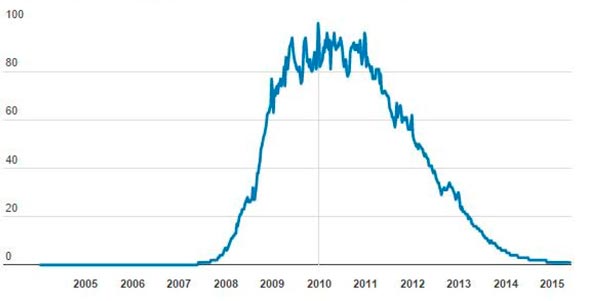
By late 2013, Telefónica acquired the remaining 15% equity to gain 100% ownership of the company (in a deal reportedly valued at an additional €7 million). However, the social platform gradually experienced a steep decline in user engagement until its complete shutdown, announced in March 2016 and finalized in August 2017. The rapid rise and mass adoption of global social networks like Facebook, Twitter, and Instagram led users to migrate away from what remained a localized ecosystem.
According to Sebastián Muriel, who succeeded Zaryn Dentzel as CEO in January 2015, the decline of Tuenti’s social platform was driven more by Instagram and WhatsApp than by Facebook. He noted that the primary disruption was the shift from desktop web to mobile smartphones. Nevertheless, he emphasized that the team actively attempted several pivots: for instance, they built a messenger service a year before Facebook introduced theirs, and launched an online platform similar to Netflix where users could interact in real time while watching content.
Ultimately, Tuenti pivoted entirely into a youth-oriented MVNO. By 2017, the telecom unit surpassed one million active subscribers across multiple markets, primarily in Spain, Argentina, Mexico, and Ecuador. Paradoxically, Tuenti proved to be significantly more profitable and commercially sustainable as a mobile virtual network operator than as an online social platform.
What Happened to the Founders
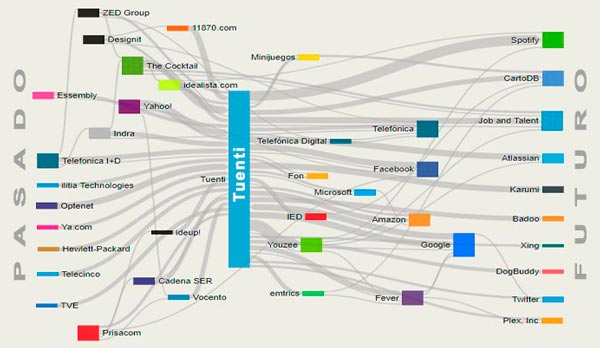
Tuenti served as an extraordinary talent incubator. Many of its former employees continue to play prominent roles across the Spanish technology ecosystem. As one former employee famously remarked: “You start believing that working alongside brilliant minds is the baseline; it is only after you leave Tuenti that you realize it is the exception”. While numerous career trajectories could be highlighted, the post-Tuenti endeavors of its core founders are particularly notable:
- Zaryn Dentzel: He remained as CEO of the rebranded Tuenti until January 2015. In 2017, he co-founded Auro New Transport Concept, which became the largest VTC (Ride-Hailing Fleet Operator) license holder in Spain, serving as a primary fleet supplier for platforms like Cabify and Uber.
- Félix Ruiz Hernández: He continues to be an active venture investor in the Spanish startup ecosystem. In 2012, he founded Buytheface, a daily deals platform that was ultimately acquired by Offerum. Alongside Zaryn Dentzel, he co-founded and backed companies such as Wegow, Jobandtalent, and Auro New Transport Concept. His angel investment portfolio also includes high-profile scale-ups such as Glovo and Hawkers.
- Adeyemi Ajao: He has established himself as a successful tech entrepreneur and venture capitalist in Silicon Valley. He co-founded Identified, a Big Data HR-tech company, which was acquired by Workday, where he subsequently served as Vice President of Strategy. He was also a co-founder of Jobandtalent and an early investor in category leaders like Cabify and Blink (acquired by Groupon). Most recently, he co-founded Base10 Partners, a venture capital firm focusing on automation. The firm successfully raised $137 million for one of its flagship investment funds.
- Joaquín Ayuso de Paúl: He relocated to Los Angeles prior to Tuenti’s acquisition by Telefónica. He architected and engineered systems for the social network Glass. In 2011, he built a payment processing infrastructure in Chile. In 2018, he launched Denizen, a neobank tailored for expats (a venture that wound down operations in 2019). He subsequently partnered with BBVA to develop a similar global banking solution designed to streamline financial services for immigrants in the United States.
- Kenny Bentley: In 2010, he spearheaded Unhosted, an open-source initiative promoting user privacy and web decentralization. In 2011, he launched Gatunes, an early Spanish music streaming service akin to Spotify. In 2016, he served as Head of Engineering (CTO) for Affinaty, an interest-based social networking application.
More Information on Entrepreneurial Success Stories
This article provides a summarized overview of the Tuenti Story. Entrepreneurship is a compelling domain rich with inspiring narratives. If you are seeking inspiration or simply interested in these business dynamics, this blog features numerous other entrepreneurial success stories as well as related content. Please feel free to use the content search bar located in the header.
Additionally, here are a few other articles that may be of interest: