

Late in the 1990s, when purchasing an airline ticket online seemed like an outlandish concept and traditional travel agencies still dominated the market, three entrepreneurs convinced that technology would completely transform the tourism industry decided to bet on a vision many deemed overly ambitious. From Silicon Valley to Barcelona (Spain), the eDreams story is that of a company born at the height of the Internet revolution, one that led the consolidation of European online travel and ultimately grew into one of the world’s largest digital travel agencies.
Behind this transformation lay the backgrounds of Javier Pérez-Tenessa, James Hare, and Mauricio Prieto: three distinct profiles united by a shared conviction that the internet would radically reshape how people organize and book travel. Their prior experience across engineering, management consulting, and Silicon Valley tech firms enabled them to spot, long before most competitors, the immense potential of a market that was then heavily undigitalized and rife with inefficiencies.
The evolution of eDreams was far more than typical startup scaling. The company successfully attracted major international investors, expanded rapidly across Europe, and took part in some of the digital travel sector’s most prominent M&A transactions. From the entry of TA Associates to its acquisition by Permira and the subsequent creation of eDreams ODIGEO, the firm transitioned from an emerging startup into the leading online travel agency group in Europe.
Yet the eDreams story was not without its hurdles. The company had to navigate intensifying global competition, meet the rigorous demands of public markets following its IPO, and, years later, endure the total collapse of global tourism triggered by the pandemic. At every juncture, however, it demonstrated a persistent capacity to pivot and adapt, reinventing its business model as it evolved from a straightforward OTA into a data-driven, automated, subscription-first global tech platform.
This article traces the chronological trajectory of eDreams: from the personal backgrounds of its founders and its initial launch to its international expansion, major corporate deals, and enduring legacy within the Spanish entrepreneurial ecosystem. Beyond the core metrics and corporate milestones, the eDreams case study illustrates how a Spanish company helped reshape European travel and paved the way for a generation of tech companies to follow.

Javier Pérez-Tenessa
Javier Pérez-Tenessa de Block was born in Mexico City and moved to Spain at the age of ten. He grew up in a household with a strong cultural and professional foundation. His father, Antonio Pérez-Tenessa, was a prominent Spanish attorney who held high-ranking institutional positions in Spain, serving as Secretary General of the Council of State and President of its Eighth Section, while his Mexican mother, Marlene de Block, had worked as a model in Mexico and Spain. Although he did not hail from a traditional business lineage, he was raised in an intellectually rigorous environment with a distinct international outlook.
From an early age, he demonstrated exceptional academic performance. He attended the Lycée Français in Madrid (Spain) and later earned a degree in Aerospace Engineering at the Polytechnic University of Madrid (Spain), graduating first in his class. Upon graduation, he worked on projects within the aerospace and aviation industries, participating in satellite design at Aérospatiale in France and working on aircraft engine development for Pratt & Whitney in the United States.
Despite his brilliant technical background, he quickly recognized that his interests extended far beyond pure engineering toward corporate strategy and technological transformation. This ambition led him to McKinsey & Company, one of the world’s premier management consulting firms, where he honed his skills in business analysis, market dynamics, and corporate scaling. The pivotal turning point in his career came when he decided to pursue an MBA at Stanford University, right at the heart of Silicon Valley, the cradle of tech giants.
In the mid-1990s, Stanford stood as a core epicenter of the digital revolution. The rapid rise of Netscape, Yahoo!, eBay, Amazon, and the earliest internet pioneers was reshaping the global economy. Pérez-Tenessa did not merely study there; he experienced the birth of modern tech entrepreneurship from the inside.
During this period, he worked at Netscape, the company credited with popularizing the modern web browser. That experience proved foundational. He witnessed firsthand how the internet could eliminate intermediaries, streamline operational workflows, and create entirely novel business models. He began to realize that numerous legacy industries remained largely untouched by digitalization, and that the travel and tourism sector presented an extraordinary opportunity.
James Hare
James Hare is an American executive who studied Business Administration at Harvard and worked at McKinsey, where he first met Javier. He later earned an MBA from Stanford University, where the two crossed paths once again. Their meeting was no coincidence; rather, it was driven by a shared frustration with a travel industry that remained tethered to brick-and-mortar agencies and manual operational workflows.
They were convinced that the internet could eliminate the information asymmetry inherent in air travel pricing and booking. At the time, only traditional travel agents had access to Global Distribution Systems (GDS), the core B2B technology platforms displaying airline inventory, real-time pricing, flight schedules, and booking capabilities. GDS networks serve as the primary wholesale marketplaces for global air travel. The industry’s top three legacy GDS platforms were Amadeus (headquartered in Madrid, Spain, dominating Europe), Sabre (United States), and Travelport (United States/United Kingdom, encompassing Galileo and Worldspan).

Javier and James posed a fundamental question: “What if we put that power directly into the hands of the consumer?” Inside the halls of Stanford, they founded eDreams in 1999. Within this partnership, Javier brought a blend of technical engineering, strategic vision, and an international perspective, while James provided deep tech expertise and operational execution. Their business model seems self-evident today, but at the time, it was fundamentally disruptive.
Mauricio Prieto
Although the original co-founders of eDreams were Javier and James, Mauricio Prieto joined them shortly thereafter. Prieto, a Mexican national, holds a graduate degree from Princeton University and an MBA from the University of California, Berkeley. His professional background included work in Mexico as a management consultant at Booz Allen Hamilton and in the United States as head of product development at Charles Schwab. Mauricio originally met Javier while windsurfing in California.
When they reconnected in 1999, Javier pitched the eDreams concept to him, and Prieto joined the team soon after. He shared their strong conviction regarding the transformative power of the internet. Mauricio brought a perspective sharply focused on product development and user experience (UX). He recognized that the web was not merely a new sales channel, but a medium to build digital communities, foster online consumer trust, and streamline inherently complex processes.
The creation of eDreams was the synergy of three distinct yet highly complementary professional backgrounds: Javier Pérez-Tenessa, James Hare, and Mauricio Prieto. All three converged in Silicon Valley just as the digital economy was beginning to disrupt traditional industries and tech startups were proving that the internet could radically alter consumer behavior.
Mauricio proved to be a critical asset in developing the company’s business model, performance marketing strategies, and international expansion. His contribution was so decisive that, despite not being present at day one, the company recognizes him as an operational co-founder. Although early-stage startups require everyone to wear multiple hats, over time the C-suite structure naturally formalized: Javier served as Chief Executive Officer (CEO), James as Chief Business Officer (CBO), and Mauricio as Chief Marketing Officer (CMO), roles that continued to evolve as the business scaled.
The Initial Business Model
The primary benchmark for Javier and James was Expedia, which had been founded by Microsoft in 1996 as Microsoft Expedia Travel Services. Expedia quickly established itself as the U.S. market leader in online flight bookings, validating the viability of the model. Competitors soon emerged in the U.S., such as Travelocity (1996) and Priceline (1997). Elsewhere in the world, online flight distribution barely existed, with only early movements in Europe through pioneers like Lastminute.com (UK, 1998).
It is worth noting that the world’s first online hotel booking platform was Travelweb (USA, 1994), launched by a consortium of major American hotel chains including Marriott, Hilton, Hyatt, Holiday Inn, and Sheraton.
Against this backdrop, eDreams sought to define its own value proposition. Unlike existing portals that focused solely on ticket sales, the founders originally envisioned eDreams as an experience platform powered by local guides who would help travelers discover and realize their dream trips. They dubbed these local guides “dreamers”, giving rise to the brand name eDreams: dreams made possible through the internet.

This initial concept of a local guide network soon evolved into developing a proprietary algorithm capable of integrating with third-party platforms to deliver a comprehensive suite of flights, hotels, and dynamic vacation packaging. Their core differentiator became geographic strategy: while incumbents focused heavily on the U.S. market, eDreams targeted Europe. Despite this strategic pivot, the brand name was retained, perfectly aligning with its mission to inspire and empower global travel.
This is precisely where eDreams identified its core opportunity: building the first major pan-European online travel agency (OTA) powered by proprietary technology. From day one, this pan-European focus meant the platform had to be inherently multilingual, maintain a multi-country presence across Europe, support multi-GDS integrations for flight inventory, leverage custom flight-comparison engines for pricing and schedules, and offer a more flexible operational model than Expedia at the time.
Although Javier had been raised in Madrid (Spain), when deciding where to establish their headquarters in Spain, the team strategically selected Barcelona (Spain). The city offered lower operating costs, strong technical talent, and a vibrant tech ecosystem. In 1999, Madrid maintained a more traditional corporate environment less geared toward software engineering, whereas Barcelona demonstrated a superior ability to attract international tech talent.
Securing Investment
With their strategy defined, the next milestone was securing capital. Fortunately, Javier and James had cultivated an extensive network in Silicon Valley, allowing them to secure early backing rapidly. “James and I raised it with a three-page paper business plan, and within two weeks we had €1.5 million”, Javier recalled. The lead angel investor was Marc Esteva, whom they met through the McKinsey network, closing this initial seed round in December 1999.
With this initial capital, they focused on delivering a functional prototype featuring an early flight search engine integrated with legacy GDS networks. Simultaneously, they prepared robust unit economics and an flawless execution roadmap. Their core pitch to investors emphasized that online travel demand was genuinely validated, that Europe lacked a clear market leader compared to the United States, and that operating out of Barcelona (Spain) provided a significantly lower burn rate than Silicon Valley.
Silicon Valley venture firm DCM (Doll Capital Management) became the next institutional investor to back them in early 2000. By June of that year, the platform was live and operational in both Spain and Italy. However, continuous scaling required further capital infusion, prompting Javier to travel extensively to Silicon Valley, London, and Paris to pitch global VC firms. Raising these rounds required demonstrating strong traction metrics, financial projections, and a granular growth plan. Roughly a year later, Apax Partners (UK) joined, followed by 3i Group (UK). Between 1999 and 2001, eDreams closed three funding rounds totaling €30 million, reaching a post-money valuation of €70 million.
Ultimately, venture funds recognized that the executive team was assembled, the product was proven, early revenues were flowing, and the European addressable market was massive. They launched the venture at scale. According to Javier: “We built an outstanding team in Barcelona (Spain) composed almost entirely of international talent from California, London, and Italy. At first, there wasn’t a single local employee from Barcelona. We also had a tech team in the US working on core software development”.

Growth and International Expansion
Plans rarely unfold exactly as anticipated. Following the September 11, 2001 terrorist attacks in the United States, the global travel industry came to a virtual standstill. Within months, numerous peer companies went bankrupt. eDreams was forced to execute drastic operational measures: cutting overhead through layoffs, imposing strict corporate austerity, abandoning multi-million-dollar traditional advertising campaigns, and pivoting focus toward profitability via SEO and early SEM acquisition channels. Crucially, engineering efforts were redirected toward optimizing their proprietary search algorithm to deliver pricing that no traditional brick-and-mortar agency could compete with.
To execute their European expansion, the company adopted a centralized operational framework rather than establishing local offices in each target market, concentrating all core operations in Barcelona (Spain):
- Localized Digital Products: Deploying dedicated, multi-language web portals.
- Centralized Multilingual Support: Offering native customer service support across core languages.
- Tailored Digital Marketing: Executing performance marketing campaigns adapted to specific regional markets.
- Scalable Procurement: Negotiating centralized agreements with commercial airlines and GDS networks to leverage economies of scale.
This centralized hub model was pioneering in Europe at the time and enabled rapid scaling at a low cost structure. Alongside Spain, Italy quickly emerged as one of eDreams’ primary revenue drivers. Expansion into France followed in 2002, the United Kingdom in 2003, Germany in 2004, and subsequently into additional markets including Portugal, Belgium, the Netherlands, Switzerland, and Sweden. Furthermore, beyond core flight bookings, the platform expanded into hotel reservations (2001–2002) and car rentals (2003). These cross-selling capabilities significantly enhanced gross margins. By late 2003, the company reached operational breakeven, an extraordinary milestone for an internet startup in that era.
Between 2004 and 2005, eDreams introduced dynamic vacation packages, adding travel insurance between 2005 and 2006, one of the highest-margin ancillary products in the industry. By 2006, eDreams was not only the undisputed market leader in Southern Europe, but also one of the largest online travel agencies across the entire continent.
Notably, James Hare had played a pivotal role in the early conceptualization, business model architecture, and initial operational launch following the move to Barcelona (Spain). However, his executive involvement decreased over time. While specific details were never publicly disclosed, evidence indicates he stepped down from daily operations between 2003 and 2004, while continuing to serve on the Board of Directors for several years thereafter.
The Sale to TA Associates
During this period, new online travel startups were emerging across virtually every European country. While Expedia dominated the United States alongside major players like Travelocity and Priceline, the European landscape remained highly fragmented. Each market was governed by distinct regulatory environments and dominated by diverse regional airlines. eDreams stood out as the sole platform engineered to operate seamlessly across multiple languages and jurisdictions. Furthermore, between 2004 and 2006, European online travel was growing at a double-digit compound annual rate.
Against this backdrop, TA Associates (USA), one of the world’s largest and most experienced private equity firms, identified eDreams as the prime vehicle to consolidate a European market on the brink of hypergrowth. eDreams offered not only a proprietary search engine, but also a proven, profitable business model driven by transaction commission structures.
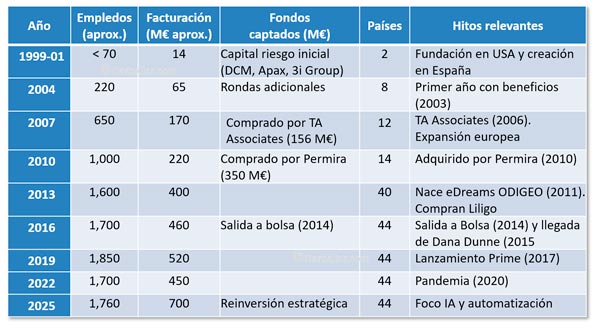
Consequently, TA Associates acquired a controlling stake in eDreams in October 2006 in a transaction valued at €156 million. The private equity firm secured a 75% equity stake, while the management team retained the remaining 25%. For TA Associates, the combination of market leadership, solid profitability, a strong founding team, and an expanding addressable market represented an exceptional strategic investment. TA’s buyout thesis was clear: accelerate growth over a multi-year horizon to execute a highly lucrative exit. The firm retained Javier as Chief Executive Officer, backed an aggressive scaling roadmap, and provided the necessary growth capital.
Under TA’s ownership, eDreams expanded into additional European geographies, fortified its market positions in Italy, France, Germany, and the United Kingdom, broadened its inventory across flights, hotels, and dynamic packages, and upgraded its core proprietary search and dynamic pricing engines. As a result, eDreams established a physical and digital footprint across more than 12 European markets, cementing its position as one of the top three Online Travel Agencies (OTAs) in Europe. (In the travel industry, companies operating under this model are universally referred to as OTAs).
Despite the onset of the global financial crisis in 2008, eDreams sustained its upward trajectory, and by 2009 was competing head-to-head with Expedia for dominance in the European market.
The Sale to Permira and the Creation of Europe’s Largest OTA Group
As previously noted, TA Associates is a private equity firm whose primary mandate is to optimize corporate management and profitability to execute a profitable exit over a medium-term investment horizon. Following years of aggressive growth, by 2009 the optimal conditions had been met to exit the investment.
In September 2010, TA Associates sold eDreams to Permira, one of Europe’s largest private equity firms, in a deal valued at €300 million. While the exit generated a strong return for TA Associates, Permira viewed eDreams as the ideal platform company to build, with its backing, the dominant online travel group in Europe. And that is precisely what they executed.

Beyond its strong market positioning, eDreams’ main asset was its highly advanced and scalable proprietary technology architecture. Given that the European market remained fragmented (with Go Voyages leading in France, Opodo in the UK and Germany, etc.), Permira identified a buy-and-build consolidation opportunity to form a European powerhouse. Executing this ambitious M&A strategy required substantial capital. Permira brought in AXA Private Equity (now Ardian) as a co-investor to contribute minority growth equity.
In 2011, they merged eDreams with France’s Go Voyages. Shortly thereafter, they acquired Opodo from Amadeus (strengthening their presence in the UK and Germany). In 2012, they integrated Travellink into the portfolio (expanding across Sweden, Norway, Finland, and Denmark), followed by the acquisition of the French metasearch engine Liligo in 2013. The culmination of this buy-and-build strategy was the creation of eDreams ODIGEO, the largest OTA group in Europe and one of the largest globally. Without eDreams serving as the operational and technological foundation, this consolidation would not have been possible.
Javier Pérez-Tenessa was appointed Group CEO, tasked with leading a complex integration. As he later reflected: “Overnight, we went from managing €30 million in EBITDA from a single office in Barcelona (Spain) to managing €120 million in EBITDA across dozens of offices and multiple disparate platforms, where every legacy team believed their own technology was superior”. The acronym ODIGEO was derived from combining the corporate brands within the group: O for Opodo, DI for Dreams (eDreams), and GEO for Go Voyages.
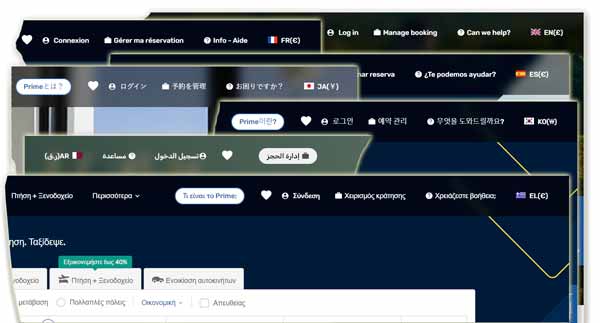
The combined operating metrics reached scale previously unimaginable: 14 million customers, an active footprint across 44 countries, and over 100 web domains. eDreams became one of Google’s largest corporate advertisers in Europe, dominating high-intent travel search keywords.
Throughout both the TA Associates and Permira investment cycles, eDreams consolidated a comprehensive travel catalog (encompassing flights, hotel accommodations, car rentals, dynamic packages, and travel insurance). The business logic was clear: maximize average revenue per user (ARPU), boost customer retention, and effectively compete against global OTA giants. Behind the scenes, however, the most complex challenge lay in unifying the underlying tech stack, building a centralized dynamic pricing system, running unified performance marketing, and realizing operational synergies to drive down costs.
Simultaneously, the rapid adoption of smartphones starting around 2012 triggered a major shift in consumer behavior. eDreams adapted early to this transition, developing native mobile apps with redesigned checkout flows, push notifications, and post-booking support capabilities, steadily pivoting the organization toward a mobile-first digital strategy.
The Milestone IPO
By 2013, the group had achieved record scale and profitability, backed by sustained organic growth and a consolidated pan-European footprint. The company presented an ideal investment profile for an Initial Public Offering (IPO). For Permira, floating eDreams on the public market provided a strategic liquidity event to realize part of its investment while retaining corporate control, as well as securing capital to fund future expansion into non-European markets, R&D tech investments, and product diversification.
In 2014, eDreams generated €4.5 billion in gross booking value and an EBITDA of €118 million. With its valuation crossing the $1 billion threshold, it officially became a tech “unicorn”. In April 2014, eDreams ODIGEO went public on the Madrid Stock Exchange (Ibex Small Cap) at a listing price of €10.25 per share, establishing an enterprise valuation close to €1.1 billion.

The initial trading hours were favorable, but the stock quickly faced severe downward pressure. Market analysts began raising concerns over the company’s leverage ratio, given that recent M&A transactions had been heavily debt-financed, and its over-dependence on Google Ads for customer acquisition.
Compounding these market doubts, IAG (the parent company of Iberia and British Airways) and Lufthansa publicly accused eDreams of non-transparent pricing practices a month later. The stock plummeted by 60%, triggering a wave of negative press coverage and inflicting the most severe reputational crisis in the company’s history. Within months, the share price collapsed to an all-time low of €1.80 in October 2014.
In early 2015, Javier Pérez-Tenessa stepped down as CEO, handing leadership over to Dana Dunne, a former EasyJet executive who had served as Chief Operating Officer (COO) at eDreams since 2012.
After 15 years leading eDreams, Javier retired from executive operations to transition into angel investing and mentorship. In 2017, he co-founded the venture capital firm 4Founders Capital. Beyond business, he re-engaged with a lifelong passion: music. Having studied piano since childhood, he returned to active performance and produced major musical theater productions, including the Spanish adaptations of RENT (2016) and Fun Home (2018). As a vocalist, performing across both bass and tenor ranges, he joined the choir that performed Handel’s Messiah at the iconic Palau de la Música in Barcelona (Spain).
Mauricio Prieto also departed the firm, becoming a prominent mentor and angel investor in ventures such as Plazah, TheHotelsNetwork, Wakanow, and Travel Tech Essentialist, deploying capital primarily through Lanta Digital Ventures. Additionally, he continued advising academic institutions and industry bodies as a recognized thought leader in travel technology.
James Hare, who had previously relocated to the United States while maintaining his seat on the Board of Directors, officially stepped down in 2015 alongside his co-founders. Following his exit, he fully dedicated himself to serial entrepreneurship (co-founding ventures such as Ding Dong and US2.ai), management consulting, and tech investing, leveraging the capital and expertise built during his tenure in Europe.
The Crisis and Turnaround
Under Dana Dunne’s leadership, eDreams recognized that the transactional model, selling a single flight ticket and waiting a year for the customer to return, was obsolete. Management engineered a comprehensive strategic turnaround focused on reducing reliance on Google Ads via customer loyalty programs, improving price transparency, streamlining operational workflows, cutting fixed overhead, and prioritizing long-term unit economics over pure transactional volume.
By 2017, the group demonstrated steady operational recovery: expanding gross margins, deleveraging the balance sheet, diversifying revenue streams (across hotels, packages, and subscription tiers), and boosting customer satisfaction metrics. While the stock price began to recover, costly corporate restructuring and elevated operating and financial expenses in 2019 led to a net loss of €40.5 million. Compounding these challenges, the COVID-19 pandemic struck in 2020, causing revenue to plunge by 80% and forcing aggressive headcount and cost adjustments. The company closed the year with a €124 million net loss, followed by a €65.8 million loss in 2021.
As the travel industry recovered, eDreams accelerated its growth engine in 2021 by expanding eDreams Prime, the world’s pioneer travel subscription model. In exchange for an annual fee, subscribers gained access to exclusive discounts and rates. This strategic shift fundamentally transformed the company’s unit economics, creating predictable, recurring revenue streams and a high-retention loyalty engine. Prime members booked three times as often as non-subscribers, drastically reducing customer acquisition costs (CAC), lowering reliance on paid search channels, and enhancing financial predictability. Net losses narrowed to €43.3 million in 2022.
Following years of operational volatility, the Prime subscriber base expanded past 5 million members by 2023, driving margin expansion, pushing total revenues past pre-pandemic levels, and restoring sustainable profitability. Alongside scaling Prime, eDreams executed a deep operational automation and efficiency program, encompassing process digitization, customer support automation, fixed-cost reduction, and performance marketing optimization. This execution restored capital markets credibility. While the share price did not return to its 2014 highs, the company re-established a resilient strategic foundation, ending 2023 with net profits of €32.36 million.

By 2024, the shareholder structure saw UK-based Polus Capital hold a 28.87% stake; Permira maintained 26.95%; Bybrook Capital Badminton held 10.10%; and Conversant Opportunity Master Fund held 8.40%. The remaining free float was distributed among institutional investors including Morgan Stanley, UBS Group, JPMorgan, and Goldman Sachs.
By late 2025, eDreams stood as a financially rehabilitated, highly profitable platform with a structurally sound business model. The company successfully reduced its dependence on paid performance marketing, expanded margins, and solidified its competitive position in Europe. Although carrying a sizable debt load (€450 million), leverage became far more manageable due to strong EBITDA growth. The company faces the future as a transformed, predictable OTA backed by a loyal subscriber base, while remaining exposed to global macroeconomic conditions and airline sector volatility. As eDreams continues integrating artificial intelligence across its platforms to personalize offers and drive down operational costs, its primary mandate remains building a continuous, long-term relationship with its customers.
The eDreams Entrepreneurial Talent Engine
eDreams was not only one of Spain’s first major tech startup success stories; it also served as an elite talent incubator. It was an environment where dozens of professionals learned to scale digital products, drive operations through data and unit economics, execute with rigor, navigate competitive global markets, and perform under high-growth pressure.
This corporate culture, extremely rare in Spain during the 2000s, equipped former employees with the mindset, operational skills, and networks required to launch their own ventures. According to Mauricio Prieto, alumni of the company have founded at least fifty startups, many of which have become category leaders in their respective sectors.
Below are notable companies founded in Barcelona (Spain) by eDreams alumni:
- ReviewPro (2008): A leading online reputation management platform for the hospitality sector, founded by Tim Towle and Dimitry Lvovsky. It established a global standard in hospitality tech before its acquisition by Shiji Group.
- Uvinum (2009): An e-commerce marketplace for wine and spirits founded by Nico Bour. As one of Spain’s early vertical e-commerce pioneers, it was acquired by Pernod Ricard in 2018.
- DeporVillage (2010): A sporting goods e-commerce retailer founded by Xavier Pladellorens. Its acquisition by JD Sports represented one of the largest e-commerce M&A exits in Spain.
- Beabloo (2008): A retail tech provider specializing in digital signage and in-store retail analytics, founded by Jaume Portell. A pioneer in applying artificial intelligence to brick-and-mortar retail environments.
- Metriplica (2003): An advanced digital analytics consultancy founded by Enric Quintero, recognized as one of the most influential analytics firms in Spain.
Furthermore, numerous eDreams alumni launched ventures globally across various ecosystems: Singapore (James Hare co-founded Eko.ai), Mexico (Cristina Gil founded Addede), Washington D.C. (Tedd Evers founded TripTuner), Australia (Ian Davidson founded Gofar), Israel (Nathalie Biederman founded Calya), London (Paloma Tomás founded Dotcomrepublic), Switzerland (Marco Corradino and Fabio Cannavale co-founded Volagratis and the revamped Lastminute.com; Andrea Bertoli founded Vivigratis), Paris (Alain Dinis founded Aqwatyx), and Italy (Antonio Motta founded EiEmSi Comm).
At a time when Barcelona (Spain) had not yet established itself as a consolidated tech hub, eDreams attracted top-tier international talent and immersed them in an environment defined by ambitious scaling goals, capital discipline, data-driven decision-making, and efficient execution. This density of talent fostered a powerful alumni network of co-founders, angel investors, and advisors across the global tech ecosystem.
Conclusion
The story of eDreams represents one of the most prominent case studies in Spanish and European tech entrepreneurship over the past few decades. What began in the late 1990s as the shared vision of Javier Pérez-Tenessa, James Hare, and Mauricio Prieto ultimately evolved into one of the world’s largest online travel agencies and a benchmark for digital transformation within the tourism industry.
The company’s trajectory embodies many of the core dynamics that defined the advent of the digital economy: the rise of the internet as a primary distribution channel, the influx of venture capital, the globalization of tech ventures, and the power of digital platforms to disrupt legacy sectors. At a time when buying travel online was still considered a high-risk concept, the founders of eDreams identified a structural market opportunity. They bet on the premise that global travel was a complex, fragmented market rife with inefficiencies that stood to benefit enormously from technology.
A major key to eDreams’ success was its management’s ambition to scale from day one. Unlike many European startups of the early 2000s, the company was built with a inherently global mandate. Spanning from Silicon Valley to Barcelona (Spain), and from Spain across Europe, the leadership team recognized that the internet dismantled traditional geographic barriers and that economies of scale would prove decisive in achieving market leadership.
Furthermore, the firm demonstrated a continuous capacity to pivot in response to shifting tech paradigms and competitive landscapes. Initially, it consolidated leadership in an increasingly crowded market through M&A, aggressive international expansion, and proprietary software development. Later, it transitioned toward a data-driven platform centered on automation and subscription models, staying ahead of broader e-commerce trends.
Yet perhaps the most enduring aspect of its legacy lies beyond its operational metrics or valuation: its systemic impact on the broader tech ecosystem. eDreams operated for years as an elite incubator for digital talent. Engineers, C-suite executives, product managers, and growth marketers trained within the company went on to launch new startups, venture capital funds, and technology ventures across Spain and Europe. The firm helped cultivate a generation of operators seasoned in scaling high-growth international tech businesses.
The eDreams case study delivers vital strategic takeaways for modern business leaders. First, the power of front-running technology shifts, from early travel digitization and automated performance marketing to early internationalization, mobile-first design, and subscription commerce. Second, the necessity of pairing long-term strategic vision with rigorous operational execution. Third, and perhaps most crucial, the imperative of continuous adaptation. Across more than two decades, the company reinvented its operating model multiple times to navigate macroeconomic crises, evolving consumer habits, paradigm shifts in technology, and hyper-competitive market dynamics.
Ultimately, the story of eDreams is more than the biography of a single firm, it is the blueprint of how a tech ecosystem is built, how a generation of founders is forged, and how a bold vision can permanently redefine a global industry.
Further Information
This case study summarizes the eDreams story, a story of pioneering vision, hypergrowth, and resilience that permanently transformed travel across Europe. If you are seeking entrepreneurial inspiration or are interested in deep-tech innovation, explore additional case studies and analysis across our site using the search tool located in the header.
Below are several related articles that may also be of interest:
- The Universal DX Story: AI-Powered Cancer Detection from a Single Drop of Blood
- The Isotrol Story: The Technology Driving the Digitalization of Renewable Energy
- The VirusTotal Story: The tool that Google turned into a shield against global malware
Bibliography
Although the content of this blog is intended for educational and informative purposes, we take data verification very seriously. Our articles are the result of interviews with key figures and industry experts, as well as meticulous research across official sources, media outlets, scientific publications, and in-depth reports. Because of this, the stories we share are often recognized by their own protagonists as highly accurate. In any case, if you spot any errors or inaccuracies, we would be incredibly grateful if you could leave a comment at the end of the article or let us know at blog@carballar.com.
However, as a non-profit, educational blog, we operate with a lean approach, which means we cannot dedicate the time required to exhaustively reference every single piece of data presented. Nevertheless, should you need to verify any of the figures or information, we have attached some of the primary sources utilized below. Please keep in mind that, since this is a Spanish company, the majority of these sources are in Spanish.
- Libro: “eDreams: The Challenges of Building an Online Travel Agency“. IESE Business School (Caso de estudio). https://www.iese.edu/en/case-library/ (Acceso mediante buscador de casos, requiere suscripción).
- Libro: “El libro rojo del emprendedor“. Editorial Empresa Activa. Autor Ewald Kliegel. Menciona el caso eDreams como ejemplo de escalabilidad.
- Libro: “Barcelona Startup: Historia e historias del mayor ecosistema tecnológico y digital del sur de Europa“. Autores Miguel Vicente y Carlos Blanco, editorial Deusto.
- “Análisis del modelo OTA: eDreams y su resiliencia en el mercado bursátil“. Hosteltur, revisado en mayo de 2026. https://www.hosteltur.com/
- “eDreams ODIGEO: La historia de un gigante de los viajes“. Expansión, revisado en mayo de 2026. https://www.expansion.com/empresas/transporte/edreams.html
- “eDreams y como hacer volar el gran unicornio“. Viaempresa, revisado en mayo de 2026. https://www.viaempresa.cat/es/empresa/edreams-y-como-hacer-volar-el-gran-unicornio_202091_102.html
- “eDREAMS: El reto de emprender e invertir, con Javier Pérez-Tenessa“. SeedRocket TV, revisado en mayo de 2026. https://www.youtube.com/watch?v=r-IkOKS3VsM
- “From Zero to IPO: Building eDreams Before the Playbooks”. Travel Tech Essentialist. https://traveltechessentialist.substack.com/p/from-zero-to-ipo-building-edreams
- “Historia”. eDreams, revisado en mayo de 2026. https://www.edreamsodigeo.com/es/compania/historia/
- “How eDreams Became the First Spanish Unicorn“. Itnig Blog, revisado en mayo de 2026. https://wp-origin.itnig.net/edreams-unicorn/
- “Javier Pérez-Tenessa: El hombre que cambió el sector turístico en España“. Forbes España, revisado en mayo de 2026. https://forbes.es/empresas/
- “Para emprender, el dinero no siempre es lo más importante”. Emprendedores, revisado en mayo de 2026. https://www.emprendedores.es/casos-de-exito/claves-edreams/
- “Edreams. Los fondos echan a Pérez-Tenessa”. Hispanidad, revisado en mayo de 2026. https://www.hispanidad.com/hemeroteca/confidencial/edreams-los-fondos-echan-a-prez-tenessa-presidente-y-fundador-vala-10-20150126-167827-2_109603_102.html
- “eDreams: al capital riesgo no le salen las cuentas”. Hosteltur, revisado en mayo de 2026. https://www.hosteltur.com/172030_edreams-al-capital-riesgo-no-le-salen-cuentas.html
- “El fondo de inversión Permira compra eDreams a TA Associates por unos 300 millones”. Europa Press, revisado en mayo de 2026. https://www.europapress.es/economia/noticia-economia-empresas-fondo-inversion-permira-compra-edreams-ta-associates-300-millones-20100728181241.html
- “El fondo estadounidense TA Associates se hace con la agencia de viajes en Internet Edreams por 153 millones”. EL PAÍS, revisado en mayo de 2026. https://elpais.com/diario/2006/10/30/economia/1162162807_850215.html
- “El portal de viajes eDreams Odigeo anuncia su salida a Bolsa”. El País, revisado en mayo de 2026. https://elpais.com/economia/2014/03/06/actualidad/1394130319_131903.html
- “La agencia de viajes tradicional fuera de la Red desaparecerá”. El País, revisado en mayo de 2026. Entrevista a Javier Pérez-Tenessa sobre el futuro del turismo online. https://elpais.com/diario/2006/11/05/negocio/1162735412_850215.html
- “Historia corporativa de eDreams“. Wikipedia, revisado en mayo de 2026. https://en.wikipedia.org/wiki/EDreams
- “Perfil de Javier Pérez-Tenessa”. Wikipedia, revisado en mayo de 2026. https://en.wikipedia.org/wiki/Javier_Perez-Tenessa
To explore the financial milestones in greater detail, such as the entry of TA Associates, the acquisition by Permira, or the IPO, refer to the historical archives of the Spanish National Securities Market Commission (CNMV, Comisión Nacional del Mercado de Valores), which host the company’s IPO prospectuses and material facts/regulatory disclosures (https://www.cnmv.es).