

How did a small tailoring brand from Seville transform into an international lifestyle group? The Scalpers story is far more than the evolution of a fashion brand; it is a chronicle of business intuition, constant reinvention, and strategic vision. From its early days with a skull as its emblem to its consolidation as a benchmark in contemporary retail, the journey of Scalpers reveals how an initial idea can transform into an ecosystem of brands, formats, and experiences. This article invites you to discover the milestones, decisions, and figures that have shaped one of the most unique companies on the Spanish business scene. Let’s look at the history of Scalpers.
It all began with a group of friends who shared a common goal: to redefine menswear through an irreverent, elegant, and urban perspective. The concept of Scalpers was born in Seville, with a value proposition that broke away from classical tailoring codes in favor of a disruptive aesthetic. During its early years, the brand established itself as a local phenomenon, gaining traction among those looking to stand out without sacrificing style.
Over the years, Scalpers mastered the art of reinvention, transitioning from small boutiques to a global network boasting hundreds of points of sale and an international footprint. Its global expansion was progressive, learning from both trials and triumphs, eventually consolidating its presence in key markets such as Portugal, Mexico, and Chile, and operating across 8 countries. In parallel, the pursuit of smart capital allowed the company to onboard strategic partners and investment funds that effectively accelerated large-scale growth while creative and commercial control remained anchored in Seville.
The reality is that Scalpers ceased to be just a menswear brand and evolved into a comprehensive lifestyle brand. It launched product lines for women, children, sportswear, and home decor, developed its own marketplace, and invested in flagship stores that reinforced its brand identity. Creative evolution remained constant through international collaborations, new visual narratives, and a strong commitment to sustainability and functional design. This business model was fully rounded out by a solid corporate structure, professionalized management, and a robust omnichannel strategy.
This article traces every milestone of that transformation. Filled with strategic pivots and bold decisions, this journey serves as both a lesson in resilience and a case study of industry leadership. At every stage of its evolution, Scalpers has proven that entrepreneurship requires more than just intuition and creativity: it demands discipline, strategic vision, and the agility to learn from every obstacle. The Scalpers story provides deep inspiration for anyone passionate about innovation and business.

The Founders
The beginnings of Scalpers are highly unique, as one would expect from a fashion enterprise. It could be described as the story of a group of friends who came together with a fierce entrepreneurial drive and a shared willingness to work hard to achieve success.
Our first founder is Borja Vázquez Bernal (Seville, 1977). Born into an affluent family, his parents, both lawyers, wished for their son to become a notary public. Consequently, Borja studied Law at the University of Seville, though his true ambition was to become an entrepreneur. As he recalls, “I struck a deal with my father: he would pay for my master’s degree if I finished college successfully. I passed nearly two academic years’ worth of courses in a single year, with honors. And then I pursued a Master in Business Administration“. That degree was an MBA at the Instituto de Empresa (IE) in Madrid.
The second founder is Alfonso Vivancos Ruiz (Seville, 1974). He studied Industrial Engineering and, like Borja, also completed an MBA at the Instituto de Empresa, where the two crossed paths. Alfonso maintains a lower public profile than Borja, but his exceptional capabilities in operational management made the two highly compatible partners.
Borja’s final MBA venture project consisted of a business plan for an eco-friendly car wash network. According to Borja, “The panel liked it so much that even some of the jury members wanted to invest in it. On paper, the project showed great profitability metrics“. Alfonso and Borja launched the venture and successfully opened 60 points of sale across Spain. Unfortunately, the business eventually failed due to operational issues outside the scope of this text; however, it forged their entrepreneurial resilience and depleted their initial savings.
The third founder shares a deep connection with the nobility. He is Rafael de Medina Abascal (Madrid, 1978), the 20th Duke of Feria and 17th Marquis of Villalba, belonging to one of Spain’s most influential aristocratic families. He is the son of Rafael Medina y Fernández de Córdoba and the Seville-born model Natividad Abascal, widely known as Naty Abascal. Rafael spent his childhood in Seville and attended private boarding schools in Spain, England, and the United States, where he earned a degree in Business Administration from the University of Washington. Fluent in four languages, and despite a stint working at Credit Suisse, he soon discovered that his true passion lay in the world of fashion and entrepreneurship. Rafael met the other two co-founders through shared networks within Seville and Madrid business circles.

The Birth of the Scalpers Concept
The failure of Borja’s eco-friendly car wash network led him into a period of reflection. A mutual friend of the co-founders, Alberto Artacho, was running a small, home-service, made-to-measure shirt tailoring business and invited them to collaborate. This service was strategically targeted at directors and high-level executives who had little time to visit traditional tailors. It was a highly developed business model in England but virtually unknown in Spain.
Borja, Alfonso, Rafael, and Alberto, alongside another friend, Marcos Ybarra, met at a café in Madrid to discuss how they could collaborate and scale this artisanal project. As they brainstormed, they realized there was an underserved niche market: offering high-quality menswear tailoring that broke away from traditional formality. The core idea was to inject a spirit of rebellion. “When we met, we talked about how to give it dimension, scale, and the care needed for the project to thrive“, Borja explained. Additionally, one of the clients from Alberto’s tailoring service, Miguel Zarco, owned an online tie business and suggested integrating it into the venture.
In September 2007, they incorporated the company Scalpers. In the midst of the looming economic crisis, they opened a store in Seville and another in Madrid. The initial value proposition was to deliver premium menswear tailoring with an innovative and accessible approach. According to Rafael Medina, “the first major sales hit was the famous velvet slippers“, followed by “the Oxford shirts featuring the skull logo“, which would become the brand’s most iconic product line. The very first signature item for Scalpers, however, was the tie, specifically a tie embroidered with a skull. This seemingly minor detail would become the visual DNA of the brand. It was slightly rebellious, edgy, and instantly recognizable.
Strictly speaking, the word scalpers refers to individuals who engage in resale. But, in financial markets, this is a trading strategy that involves executing multiple buy and sell orders within a very short timeframe, aiming to capture small profits from each trade. When aggregated, these frequent small gains yield a significant overall return. This activity demands speed, sharp discipline, and rigorous risk management.
The Early Years of Scalpers
The company’s early years were defined by the vital need to maximize every single resource. Although some of the founders enjoyed a high social profile, the company operated with very limited financial resources. Without a doubt, this social capital facilitated the brand’s launch, granting it instant visibility and credibility within the premium segment. However, the lack of financial capital forced them to implement strict operational discipline. This dichotomy ensured that the venture was not built solely on glamour, but on efficiency and profitability from day one, allowing the founders to refine their value proposition and retail business model.
In 2008, just a year after its incorporation, Scalpers established a strategic alliance with El Corte Inglés, one of the largest retail groups in Spain, which operates a renowned chain of department stores. As a result of this agreement, Scalpers began selling its products through a retail concession model, operating as shop-in-shops. El Corte Inglés refers to these dedicated brand spaces within its department stores as “corners“.
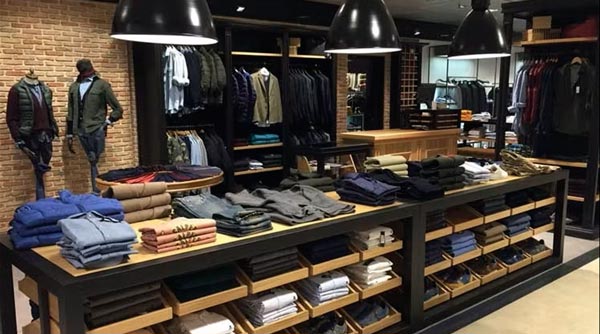
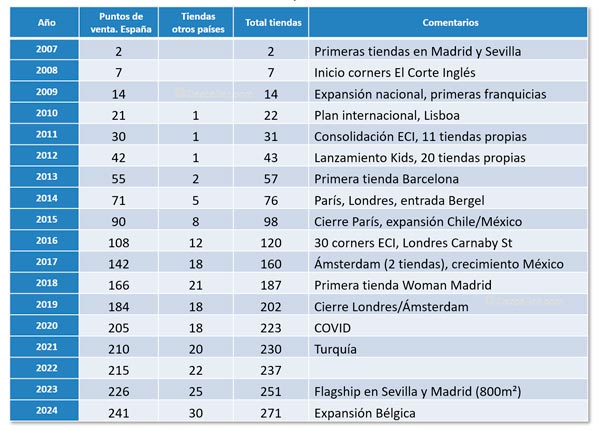
This corner model was highly attractive to Scalpers, as it provided access to premium locations in major Spanish cities without the heavy capital expenditure required to open standalone boutique stores. Nevertheless, for locations where this option was unavailable, they began developing a retail network consisting of both corporate-owned and franchised stores. By 2010, the brand already operated eleven stores, half of which were franchises. That same year, in 2010, they expanded internationally by opening a storefront in Lisbon, Portugal.
The International Expansion of Scalpers
By 2016, the company had reached a total of 30 points of sale across Spain and Portugal, combining standalone stores and department store corners. Regarding international expansion, in mid-2016 they took the bold step of opening a boutique in London at 45 Carnaby Street, a strategic location in an area renowned for fashion and contemporary lifestyle. The retail space spanned 100 square meters across two floors.
Subsequently, they opened stores in Paris (France) and Amsterdam (Netherlands), and launched their expansion into Latin America with storefronts in Chile and Mexico. Simultaneously, they invested heavily in the e-commerce business through their proprietary website and platforms like Amazon. This deployment, however, was not without its challenges. For instance, the UK and Netherlands locations proved unprofitable and were eventually closed. In their place, the company pivoted to bolster its online business in those specific markets.
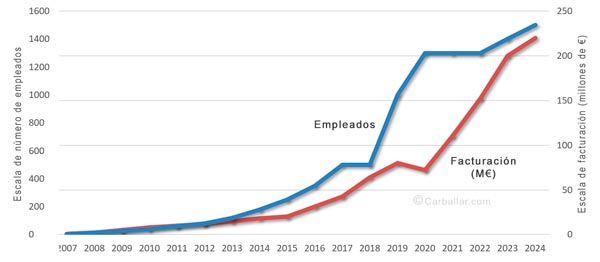
Despite this minor international retreat, their domestic position in Spain grew increasingly secure. By 2018, the company employed a workforce of over 500 people and operated more than 130 points of sale. The majority, around 100, were located in Spain, divided between corporate-owned stores and corners within El Corte Inglés. The enterprise would continue to grow in the following years, both domestically and internationally. By 2020, their retail footprint had reached 229 points of sale.
The digital channel has always received dedicated, strategic focus from Scalpers. Beyond developing their proprietary website, they also sell through international marketplaces such as Zalando, Asos, La Redoute, Privalia, and About You. This diversification of digital channels has been key to their global expansion, allowing them to scale internationally without requiring massive capital investments in physical brick-and-mortar stores.
Consequently, while Spain remained their primary market, they established a strong presence in Portugal, Mexico, and Chile. Furthermore, they gradually achieved market entry into 8 additional countries, including France, Turkey, Belgium, and Peru. By 2024, the brand boasted a total of 350 points of sale, alongside strategic plans to expand into the United States and the Middle East.
The Pursuit of Smart Capital
Scalpers’ initial growth was organic and self-funded. Organic growth implies that the company relies on its own resources and generated profits. Once the viability of their business model was proven and a loyal customer base consolidated, they faced the challenge of how to scale the business. In any case, it was evident that they would require capital.
In 2011, they brought in a new partner who invested 500,000 euros. Scalpers’ initial shareholding structure was distributed as follows: Rafael Medina held 24%, Alberto Artacho 21.67%, and Borja Vázquez 20%. The remaining shares were split among Alfonso Vivancos, Marcos Ybarra, Meby Inversiones, and Nimbus Capital.
With these initial investments, they managed to grow primarily within Spain and initiate a cautious international expansion focused on capital efficiency and risk mitigation. They reached agreements with local partners to open stores in Mexico, South Korea, and Japan. Once it was validated that the Scalpers business model was replicable and well-received outside of Spain, it was time to take it a step further.
The strategies implemented up to that point minimized risk but were inherently slow. To achieve a leap in scale, they needed not only capital but a corporate structure capable of absorbing the necessary risk. This level of capital-intensive expansion and management can only be achieved through partners with strategic know-how, particularly in logistics and international distribution. This strategic backing came from Jaime Bergel and Pedro Sainz de Baranda.
Jaime Bergel has a distinguished track record in the world of private equity. He was a founding partner and chairman of Gala Capital, one of Spain’s top three venture capital and private equity firms. Previously, he held executive roles at institutions such as Merrill Lynch and Goldman Sachs. He was also an advisor at H.I.G. Capital (Harvard Investment Group), a global private investment firm. For his part, Pedro Sainz de Baranda had served as the executive chairman of Otis and sat on several Boards of Directors for large industrial companies, such as Acerinox.
In 2014, Jaime Bergel and Pedro Sainz de Baranda incorporated the vehicle Trendsetters & Fashion (T&F) specifically to invest in Scalpers. That year, they acquired a minority stake in Scalpers with the objective of gaining a deeper understanding of the business. Their stake granted them representation on the Board, allowing them to influence decisions and inject capital to accelerate growth, a classic growth equity investment.
Phoenix Group Trade joined T&F in these investment rounds. Phoenix World Trade is widely known for operating Zara’s retail store network in Venezuela. Their entry was not limited to a financial contribution; it also provided Scalpers with direct, specialized expertise in logistics management and retail brand distribution across Latin America.
In 2017, T&F completed its acquisition of control over Scalpers by purchasing a 70% stake, buying out the shares of Alberto Artacho, Marcos Ybarra, and Rafael Medina (managed by his wife, Laura Vecino). This transaction valued the company at approximately 30 million euros, at a time when annual revenue stood at around 42.5 million euros. Borja Vázquez and Alfonso Vivancos, as the sole representatives of the original founding team, retained 20% of the capital, while the remaining 10% remained in the hands of Phoenix Group Trade and other minority shareholders.
Although Borja Vázquez and Alfonso Vivancos held a minority stake, they always retained operational control and strategic direction over the company. Borja continued as chairman, responsible for the brand’s strategic vision and positioning. He was the driving force behind international expansion and product line diversification (women, children, home, sportswear), serving as the public face of the brand in interviews and business forums. Meanwhile, Alfonso serves as Chief Executive Officer (CEO), responsible for the day-to-day operational management of the company. He leads internal teams (product, logistics, technology, retail, e-commerce), oversees the execution of the business plan, store openings, and the evolution of the digital channel. He has spearheaded the digital transformation and the development of the proprietary marketplace.
Borja provides the vision, branding, and external relations, while Alfonso Vivancos delivers management, execution, and internal corporate structure. Together, they have successfully positioned Scalpers first as a menswear tailoring brand and subsequently evolved it into an international brand whose differentiation centers on offering a specific lifestyle.
In any scenario, the funds and strategic guidance (smart capital) provided by the new investors were crucial in driving Scalpers forward. The advisory from the company’s new owners was key to boosting its growth and elevating it to a new level. Consequently, the company transitioned from generating 42.5 million euros in revenue in 2017 to 64 million euros in 2018, continuing to grow consistently in the following years. In 2024, sales surpassed 220 million euros.
Toward a Lifestyle Brand
Scalpers was originally conceived as a menswear brand. In fact, in 2012, they rolled out their first children’s collection for boys as a natural extension of the adult men’s line, branding it Scalpers Kids. After a decade of consolidated presence in this market, they noticed that female customers visiting their stores frequently expressed an interest in the brand offering them the same standards of quality and design.
In 2018, they introduced the Scalpers Woman collection for the autumn-winter season. In September of that year, they opened a standalone womenswear boutique in Madrid. Integrating women’s fashion effectively doubled their addressable market. Within a short period, womenswear sales became highly significant, accounting for 27% of the company’s total revenue by 2024. This clearly proved the success of their diversification strategy. Everything indicated that the philosophy behind the skull, and the rebellious spirit it represented, was an intellectual asset that could be successfully replicated across other consumer segments. Naturally, in 2019, they expanded the Scalpers Kids collection to cater to both boys and girls.
The next strategic move was to maximize brand equity by entering new markets. In late 2021, they launched a homeware line called Scalpers Home. That same year, they introduced their sportswear line, Scalpers Adrenaline (ADN), featuring highly technical garments produced with premium performance materials suitable for various sports. The objective was to capture and retain customers throughout their entire lifecycle, covering the market as a whole. Finally, in 2024, they stepped into the cosmetics sector with Scalpers Lab, shifting the focus from fashion alone to encompass beauty.
Scalpers’ success in launching product lines across areas like homeware or sports demonstrates that its consumer appeal no longer depends solely on the quality of its suits. The brand has built a distinct identity, grounded in recognizable style, attitude, and values, that connects with its community far beyond tailoring. Consequently, it has transitioned from a label specializing in formal attire to a comprehensive lifestyle brand, capable of rapidly accelerating revenue and diversifying its business model away from the original suits that made it famous.

Completing the Business Model
The period between 2017 and 2021 was pivotal, characterized by an aggressive diversification of the product portfolio and heavy investment in technological infrastructure to support an omnichannel model. For instance, they implemented RFID (Radio Frequency Identification) technology across all products and points of sale. This grants real-time inventory visibility, which is essential for logistical efficiency and managing multiple sales channels. One must consider that Scalpers commercializes millions of garments annually.
Furthermore, as part of its digitalization and e-commerce growth strategy, Scalpers decided to start selling third-party products on its website in 2021. It curated brands that shared similar corporate values, such as urban style, quality, sustainability, or contemporary design, and integrated them into its platform. They established what is known as a marketplace: a proprietary platform that allows centralized management of inventory, logistics, and customer service, even when the products originate from third parties. Scalpers identifies these products on its website as “invited brands“.
In 2023, they took another strategic step in brand repositioning, deciding to reinforce their physical brick-and-mortar footprint with larger, better-located landmark stores designed to offer an elevated customer experience. This is what is known as a flagship store. These flagship locations also showcase and sell products from their curated “invited brands“. According to Borja, “Our goal with this opening is to create a paradigm shift, where we are migrating toward a large-store format, aligning with the company’s business strategy of becoming a global lifestyle brand“.
The commercial evolution of Scalpers reflects the maturation of an enterprise that has successfully adapted its business model to changing market dynamics, remaining true to its original value proposition while diversifying channels, geographies, and formats to build a truly global presence within the retail industry. Notably, the digital channel has established itself as a strategic business engine, accounting for 23% of the company’s total sales by 2024.
The Creative Evolution of Scalpers
So far, much has been said about business operations and retail commercialization, but being a fashion brand, the core question remains: who is behind the designs?
During the early years of Scalpers, Rafael Medina served as the company’s creative director, being the primary individual responsible for defining the brand’s aesthetic DNA. “I am in charge of the creative image direction, developing the clothing collections, I am the one who designs them, who designs the stores, the corporate image… I am somewhat the soul of the brand“, Rafael explained in a 2013 interview.
His creative approach was distinctly artisanal and highly differentiated. Rafael personally traveled to Italy to source fabrics and frequented antique shops to find vintage garments to serve as inspiration. This unconventional yet effective methodology laid the foundations for the contemporary classic style that characterizes Scalpers.
During those years, Rafael successfully developed everything from “ready-to-wear with our collection of T-shirts, polo shirts, chinos, sweaters, sneakers… to formal wear such as suits, ties, bow ties, cufflinks, and suspenders, alongside our tailoring department where clients can get bespoke tuxedos and morning coats, plus all kinds of accessories like pashminas and scarves“, in his own words. It is worth noting that Rafael Medina, Duke of Feria, is a stylish young figure who successfully translated his personal taste into the brand’s identity.
Following Rafael Medina’s departure in 2014, when he was recruited by Amancio Ortega to lead Massimo Dutti, the company decided to professionalize its design department. In 2015, they hired Nacho Ruiz de Terry. Although Nacho holds a degree in Business Administration from the University of Seville, he had been immersed in fashion since childhood, as both his mother and grandmother worked in the industry. Prior to joining Scalpers, Nacho had co-founded Scotta, a brand specializing in menswear. Following strategic differences with his partners at Scotta, he left the brand to join Scalpers. Although initially hired to manage procurement, he was promoted to creative director two years later.

Nacho implemented a design philosophy rooted in constant innovation and a rejection of creative comfort. “In the design field, an executive is the enemy of comfort. Anything that allows you to become lethargic within it harms you“, he maintained.
For the launch of Scalpers Woman in 2018, the company hired María Jesús Martín, a former executive at Trucco with extensive experience at Grupo Cortefiel. She began working at the latter in 1992 as a womenswear designer, eventually rising to commercial management roles for both Cortefiel and Pedro del Hierro. Her background also includes a stint at El Corte Inglés as general manager of the young fashion division. Although the company’s corporate headquarters are based in Seville, the womenswear creative team was established in Madrid.
For the children’s line, Scalpers brought in Amelia de la Lastra Pérez as creative director. With 15 years of experience spanning design, fashion, and painting, Amelia was a creative and versatile designer specializing in the children’s segment.
While these were the individuals who gave the brand its initial personality across its various product lines, corporate journeys evolve, and others will inevitably step in to continue their legacy. For instance, in 2024, Nacho Ruiz de Terry left Scalpers and was succeeded by Eduardo de Raúl Gilabert, who had worked closely alongside him over the preceding years.
The Scalpers Manufacturing Network
Scalpers does not own or operate its own manufacturing workshops or factories; consequently, the entire production process is outsourced. While this strategy carries certain operational challenges, its primary advantage is that it allows the company to concentrate heavily on design, marketing, and distribution, while delegating manufacturing to external third parties. This grants the company a significant level of operational flexibility.
At this stage, Scalpers produces a wide variety of goods, forcing it to rely on a diversified supplier base. The selection of each supplier is driven by criteria of quality, cost, and proximity to the end market. For higher value-added products, the company utilizes suppliers in Portugal and Spain, whereas for high-volume production with lower unit costs, it relies on manufacturers in China and Cambodia.
Turkey acts as an intermediate hub, offering a balance between Asian manufacturing costs and European proximity. Scalpers’ commercial presence in the Turkish retail market since 2021 further facilitates this production relationship.
Regardless of geographic location, the company maintains strict quality controls through its certified supplier network. According to Borja, Scalpers works exclusively with “large-scale manufacturers that provide organic fabrics and cottons, alongside dyeing processes that generate zero waste“. The company has developed dedicated lines of sustainable products, such as the Hope collection, which features garments crafted from organic cotton and other eco-friendly materials.
A prominent example within Scalpers’ supplier network is Fermir, a Portuguese manufacturer with additional facilities in Morocco that produces for some of the world’s leading brands, including Zara, Bimba y Lola, and Scalpers. Fermir represents the exact type of strategic partner Scalpers seeks: enterprises with high production capacities, vertical process control, and the agility to deliver both fast fashion (produced in Morocco) and premium, higher-luxury lines (manufactured in Portugal).
Another standout example among Scalpers’ suppliers is the community of leather artisans in Ubrique (Cádiz). Ubrique is home to specialized enterprises such as Bell Tower Spain, Ferpiel, Avana Piel, and Depacos, many of which craft goods for prestigious French and Spanish luxury fashion houses. For instance, all handbags and leather goods for the Scalpers Woman collection are manufactured in Ubrique, alongside men’s bags, leather wallets, and accessories.
Ultimately, geographic production diversity, product-specific specialization, and a focus on sustainability have allowed Scalpers to build a flexible and highly competitive supply chain. This infrastructure has been fundamental to its scaling from a small tailoring business in Seville to an international company that moves around 4.5 million garments per year.
Conclusions
Scalpers has evolved from a menswear fashion startup into a comprehensive corporate group commercializing a lifestyle across multiple product verticals (men, women, children, etc.). By 2024, the enterprise directly employed over 1,500 people, operating a retail network of 370 points of sale across 11 countries, with revenues reaching 220 million euros.
The organizational structure has undergone significant professionalization. Borja Vázquez serves as chairman, leading product development, expansion, marketing, and commercial strategy, while Alfonso Vivancos, as chief executive officer (CEO), heads operations, systems, logistics, and finance. This clear division of corporate responsibilities has enabled the founding duo to retain operational control despite holding minority stakes in the company’s shareholding structure.
The company maintains its registered office in Seville, where its corporate headquarters and R&D innovation center are located within the Cartuja Sevilla TechPark science and technology park (formerly known as PCT Cartuja).
Ultimately, the Scalpers story is the chronicle of three entrepreneurs with distinct professional backgrounds who successfully combined their core strengths to build a unique enterprise. Borja Vázquez provided business vision and financial expertise; Alfonso Vivancos delivered operational and analytical capability; and Rafael Medina contributed deep fashion industry insights and valuable media exposure.
Although Rafael Medina left the venture in 2014 to join Inditex, his contribution was fundamental during the company’s formative years. His aristocratic status and innate understanding of menswear elegance helped establish the brand’s aesthetic DNA. Following his departure from Massimo Dutti in 2020, Medina has continued his entrepreneurial career by co-founding MR. AB alongside Tomás Laso, maintaining his ties to the luxury fashion industry.
Meanwhile, Borja Vázquez and Alfonso Vivancos have demonstrated an exceptional capacity for reinvention and adaptation to meet the demands of an ever-changing market. Their corporate philosophy, summarized in the phrase “The opposite of success is not failure, but not trying“, reflects the entrepreneurial spirit that has defined Scalpers since its inception.
The firm has successfully navigated economic crises, pandemics, and shifting consumer habits, constantly adapting without losing its core essence. One of the most vital strategic takeaways from its trajectory is the importance of strategic patience. The international setbacks faced in its early years did not halt its global ambitions; rather, they refined them. The current international expansion strategy is far more cautious and sustainable compared to the hasty market entries of the previous decade.
Diversification has also been paramount. Scalpers launched as a menswear brand but systematically evolved into a lifestyle concept spanning womenswear, childrenswear, homeware, cosmetics, and a multi-brand marketplace. This diversification strategy has not been random; it has consistently respected the brand equity and its fundamental value proposition.
Today, Scalpers stands as one of the most remarkable success stories of Spanish entrepreneurship within the fashion and retail sector. The company is strategically positioned to continue its upward growth trajectory and consolidate its standing as one of the most recognizable Spanish fashion brands on the global stage.

Bibliography
Although the content of this blog is intended for educational and informative purposes, we take data verification very seriously. Our articles are the result of interviews with key figures and industry experts, as well as meticulous research across official sources, media outlets, scientific publications, and in-depth reports. Because of this, the stories we share are often recognized by their own protagonists as highly accurate. In any case, if you spot any errors or inaccuracies, we would be incredibly grateful if you could leave a comment at the end of the article or let us know at blog@carballar.com.
However, as a non-profit, educational blog, we operate with a lean approach, which means we cannot dedicate the time required to exhaustively reference every single piece of data presented. Nevertheless, should you need to verify any of the figures or information, we have attached some of the primary sources utilized below. Please keep in mind that, since this is a Spanish company, the majority of these sources are in Spanish.
- ¿Quién es Borja Vázquez? El fundador de Scalpers que revolucionó la firma de moda de Vicky Martín Berrocal. Antena 3, revisado en octubre 2025, https://www.antena3.com/novamas/moda/quien-borja-vazquez-fundador-scalpers-que-revoluciono-firma-moda-vicky-martin-berrocal_2025052368306a8f54e3973a60204af3.html
- Así es la expansión internacional de Scalpers. IMF, revisado en octubre 2025, https://blogs.imf-formacion.com/blog/mba/expansion-internacional-scalpers/
- El clásico, y rebelde, estilo del duque. Expansión, revisado en octubre 2025, http://www.fueradeserie.expansion.com/2013/05/31/personajes/1370000295.html
- El imperio de Borja y Alfonso con Scalpers: de un lavadero que fracasó a facturar 152 millones. Elespanol.com, revisado en octubre 2025, https://www.elespanol.com/reportajes/20230506/imperio-borja-alfonso-scalpers-lavadero-facturar-millones/761423979_0.html
- Scalpers abre su capital al empresario Jaime Bergel. Capital-Riesgo.es, revisado en octubre 2025, https://capital-riesgo.es/en/articles/-scalpers-abre-su-capital-al-empresario-jaime-bergel-y-al-socio-de-zara-en-venezuela-para-duplicar-su-tama%C3%B1o-en-2015/
- Scalpers eleva un 10% sus ingresos hasta los 220 millones en 2024. elEconomista.es, revisado en octubre 2025, https://www.eleconomista.es/retail-consumo/noticias/13193163/01/25/scalpers-eleva-un-10-sus-ingresos-hasta-los-220-millones-en-2024.html
- Scalpers estrena línea femenina. Elespanol.com, revisado en octubre 2025, https://www.elespanol.com/corazon/estilo/20180222/scalpers-estrena-linea-femenina/286721819_0.html
- Scalpers prevé ventas por 300 millones en 2025 gracias a su crecimiento internacional. Elconfidencial.com, revisado en octubre 2025, https://www.elconfidencial.com/espana/andalucia/2024-05-05/scalpers-preve-ventas-por-300-m-en-2025-gracias-a-su-crecimiento-internacional_3877592/
- El poder de Borja Vázquez: El sevillano que convierte a Scalpers en un emblema textil. El Cierre Digital, revisado en octubre 2025, https://elcierredigital.com/investigacion/borja-vazquez-sevillano-convierte-scalpers-referente-textil
- Historias de éxito: Scalpers. Chezagnes, revisado en octubre 2025, https://chezagnes.blogspot.com/2011/03/historias-de-exito-scalpers.html
- Las calaveras de Scalpers buscan su sitio en el metaverso. El País, revisado en octubre 2025, https://elpais.com/economia/negocios/2022-06-04/las-calaveras-de-scalpers-buscan-su-sitio-en-el-metaverso.html
- Scalpers incopora a Trendsetters and Fashion como socio mayoritario tras la salida de socios fundadores. E-commerce-News, revisado en octubre 2025, https://ecommerce-news.es/scalpers-incopora-trendsetters-and-fashion-socio-mayoritario-tras-la-salida-socios-fundadores/
- Borja Vázquez, presidente y fundador de Scalpers: “Si tienes una solución buena, aplícala y no esperes a la solución perfecta”. Emprendedores, revisado en octubre 2025, https://emprendedores.es/casos-de-exito/borja-vazquez-scalpers/
- Scalpers cierra 2024 con un incremento del 10 % en sus ingresos, hasta 220 millones de euros. Fashion Network, revisado en octubre 2025, https://es.fashionnetwork.com/news/Scalpers-cierra-2024-con-un-incremento-del-10-en-sus-ingresos-hasta-220-millones-de-euros,1696934.html
- Scalpers estrena su nuevo modelo de tienda de gran formato en Madrid y Sevilla. Emprendedores, revisado en octubre 2025, https://emprendedores.es/casos-de-exito/scalpers-flagship-store/
- Scalpers presenta un ERE que afecta a 34 trabajadores de su centro logístico. Emprendedores, revisado en octubre 2025, https://emprendedores.es/actualidad/scalpers-ere/
- Amelia de la Lastra en LinkedIn. Revisado en octubre 2025, https://es.linkedin.com/in/amelia-de-la-lastra-perez-05310a51
- Edu de Raúl Gilabert en LinkedIn. Revisado en octubre 2025. https://es.linkedin.com/in/edu-de-ra%C3%BAl-gilabert-637aaa176
- María Jesús Martín Fernandez en LinkedIn. Revisado en octubre 2025, https://es.linkedin.com/in/mar%C3%ADa-jes%C3%BAs-mart%C3%ADn-fernandez-97532b33
- Scalpers impulsa su expansión en España de la mano de El Corte Inglés. Fashion Network, revisado en octubre 2025, https://es.fashionnetwork.com/news/Scalpers-impulsa-su-expansion-en-espana-de-la-mano-de-el-corte-ingles,683915.html
- Historias inspiradoras: el éxito de Scalpers. Banco Sabadell, revisado en octubre 2025, https://hubempresa.bancsabadell.com/activities/historias-inspiradoras-el-exito-de-scalpers/
- En primera persona con María Jesús Martín Fernández: un viaje de más de dos décadas en el mundo de la moda. Infostyle, revisado en octubre 2025, https://infostyle.info/en-primera-persona/en-primera-persona-con-maria-jesus-martin-fernandez-un-viaje-de-mas-de-dos-decadas-en-el-mundo-de-la-moda
- Scalpers, el proceso hacia el éxito. Optima Retail, revisado en octubre 2025, https://optimaretail.eu/scalpers-proceso-hacia-exito/
- Web de Scalpers. Revisado en octubre 2025, https://scalperscompany.com
- Scalpers prevé ventas por 300 millones en 2025. El Confidencial, revisado en octubre 2025, https://www.elconfidencial.com/espana/andalucia/2024-05-05/scalpers-preve-ventas-por-300-m-en-2025-gracias-a-su-crecimiento-internacional_3877592/
- El imperio de Borja y Alfonso con Scalpers. El Español, revisado en octubre 2025, https://www.elespanol.com/reportajes/20230506/imperio-borja-alfonso-scalpers-lavadero-facturar-millones/761423979_0.html
- Scalpers sale a la venta. El Mundo, revisado en octubre 2025, https://www.elmundo.es/loc/famosos/2022/02/08/6200e952fdddff3b478b45b5.html
- Así ha cambiado Scalpers, la ropa de gente bien que factura 150 kilos. El Mundo, revisado en octubre 2025, https://www.elmundo.es/loc/famosos/2022/10/22/63529890e4d4d866768b45e4.html
- Scalpers Fashions SL. Empresia, revisado en octubre 2025, https://www.empresia.es/empresa/scalpers-fashion/
- Caso Scalpers. ESIC, revisado en octubre 2025, https://www.esic.edu/sites/default/files/2023-05/978-84-19480-68-2%20Caso%20Scalpers.pdf
- Scalpers, un imperio en continuo crecimiento. Expansión, revisado en octubre 2025, https://www.expansion.com/fueradeserie/moda-y-caprichos/2024/12/24/67444f20e5fdea16098b4585.html
- Franquicia Scalpers. Franquicia, revisado en octubre 2025, https://www.franquicia.net/sector/franquicias-de-moda/scalpers/
- Un rebelde con causa. La Razón, revisado en octubre 2025, https://www.larazon.es/economia/un-rebelde-con-causa-EE18580501/
- Las claves de la elegancia según Rafael Medina, duque de Feria. La Vanguardia, revisado en octubre 2025, https://www.lavanguardia.com/gente/20250401/10536806/rafael-medina-santa-eulalia-barcelona-mr-ab-elegancia.html
- Borja Vázquez y Alfonso Vivancos, el tándem al frente del nuevo hólding español de la moda. Modaes, revisado en octubre 2025, https://www.modaes.com/back-stage/borja-vazquez-y-alfonso-vivancos-el-tandem-al-frente-del-nuevo-holding-espanol-de-la-moda
- Íñigo Zaldívar (Scalpers): “Internacionalizarse no significa abrir en el extranjero, sino construir la marca fuera del país”. Modaes, revisado en octubre 2025, https://www.modaes.com/back-stage/inigo-zaldivar-scalpers-internacionalizarse-no-significa-abrir-en-el-extranjero-sino-construir-la-marca-fuera-del-pais
- Scalpers diversifica y entra en mujer con una ex Cortefiel al frente. Modaes, revisado en octubre 2025, https://www.modaes.com/empresas/scalpers-diversifica-y-entra-en-mujer-con-una-ex-cortefiel-al-frente
- Scalpers incorpora un nuevo socio y completa el 50% de una ronda para captar 1,2 millones. Modaes, revisado en octubre 2025, https://www.modaes.com/empresas/scalpers-incorpora-un-nuevo-socio-y-completa-el-50-de-una-ronda-para-captar-12-millones
- Scalpers: del nicho al volumen. Modaes, revisado en octubre 2025, https://www.xn--diezaosdemodaenespaa-76bo.com/diez-anos-de-moda-en-espana-diez-anos-de-modaeses/scalpers-del-nicho-a-la-busqueda-del-volumen-construyendo-un-grupo.html
- Así vende 200€ millones esta marca de ropa SCALPERS. Youtube, revisado en octubre 2025, https://www.youtube.com/watch?v=m67h4r07F4A
- Scalpers, referentes del emprendimiento textil español . Itnig, revisado en octubre 2025, https://www.youtube.com/watch?v=YQYh4hGg01w
- Desvelando los secretos de SCALPERS. Talent, revisado en octubre 2025, https://www.youtube.com/watch?v=gCMfXMrvQrM