
Titania is a company born within the University of Cádiz (Spain). It specializes in quality control testing for materials, as well as their industrial manufacturing and transformation processes, within the aerospace sector. Since its inception, the company has experienced steady growth, expanded its portfolio to other industries, such as the naval sector, and achieved significant international scale. Titania stands as a prime example of an academic spin-off. Let’s dive into The Titania Story.
One of the core missions of universities is to generate knowledge that can be transferred to the private sector to create societal wealth. As noted, Titania is a textbook example of what is known as an academic spin-off. The term spin-off refers to companies that emerge or derive from preexisting entities. This occurs, for instance, when a corporate department evolves into an independent business, or when a specific project or product leads to the creation of a new company. Essentially, the specialized knowledge or capabilities of an existing organization are leveraged to build a new entity.
While corporate spin-offs are common in the business world, those originating in academia are generally founded by students (university spin-offs) or by professors and researchers (academic spin-offs). The most famous university spin-off is Google, which grew out of a research project by two students (Larry Page and Sergey Brin) at Stanford University.
Ultimately, both university and academic spin-offs contribute significantly to the creation of highly skilled employment and foster economic development in emerging markets. Furthermore, they frequently drive radical innovations that translate into new business models or the launch of disruptive products that address unmet social demands.
The Origins of Titania
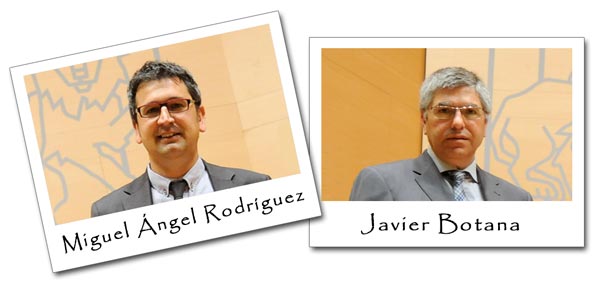
Francisco Javier Botana Pedemonte is a Professor of Inorganic Chemistry at the Higher Technical School of Engineering of the University of Cádiz (Andalusia, Spain). In the year 2000, he led a research group named Corrosion and Protection (TEP231). This group is part of the school’s Materials Science department and the Institute of Research in Electron Microscopy and Materials (IMEYMAT). Its primary research verticals focus on metal corrosion and protection, additive manufacturing utilizing metallic powders (composites), and archaeometry, the study of archaeological artifacts to decipher their history and composition.
The aerospace company CASA (Construcciones Aeronáuticas SA) operated one of its manufacturing hubs in the Puntales neighborhood of Cádiz. In 2000, CASA decided to outsource its materials quality control operations and approached the University of Cádiz to explore potential collaboration. This led them to Javier Botana, subsequently signing an agreement with his research group.
Meanwhile, Miguel Ángel Rodríguez Chacón held a degree in Chemistry from the University of Cádiz, studying from 1990 to 1995 back when university degrees spanned five academic years. Following his graduation, he worked briefly as a researcher within Javier Botana’s group before relocating to Asturias (Spain) to work at the ITMA Foundation. This technology center is a research institute dedicated to R&D and innovation in materials science. Javier Botana reached out to him to take charge of the joint project with CASA.
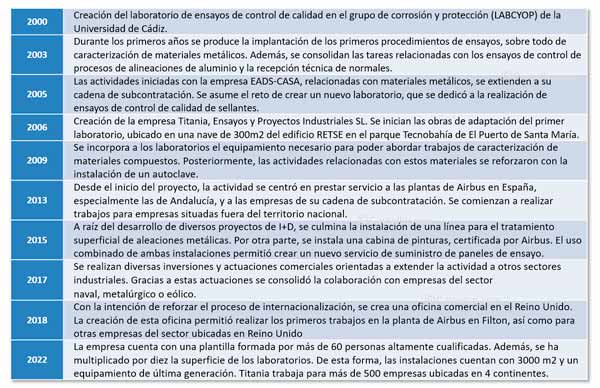
Their first operational step was establishing a quality control testing laboratory named LABCYP. Over the course of three years, they systematically implemented new testing procedures for the characterization of metallic materials. This efforts allowed them, for instance, to solidify their expertise in the process control of aluminum alloys. In this regard, the outstanding contributions of Professors Manuel Bethencourt and Mariano Marcos were instrumental to the project’s success.
During this period, EADS (European Aeronautic Defence and Space Company) was formed through the merger of Spain’s CASA, France’s Aerospatiale Matra, and Germany’s Dasa. This consolidation enabled the laboratory to initiate a collaboration with the newly formed EADS group.
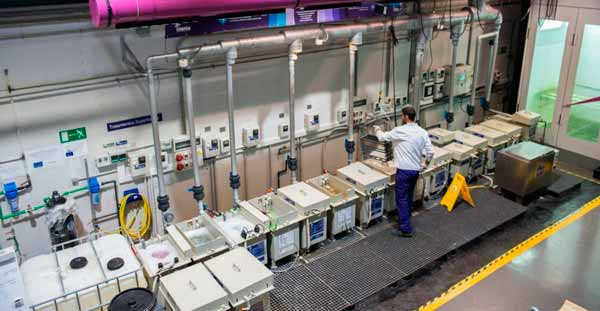
In 2005, they set up a new laboratory dedicated to deepening their quality control testing for sealant materials, which unlocked further collaboration opportunities. Eventually, the university infrastructure proved insufficient to sustain their operational pace. Crucially, the rigidity of university administrative workflows severely restricted the flexibility required to purchase capital equipment, expand facilities, or hire personnel. The University of Cádiz itself suggested they spun out and transition into an independent spin-off.
In 2006, Titania, Ensayos y Proyectos Industriales SL was incorporated with the primary corporate objective of executing tests to certify the quality of aerospace components. Its co-founders were Francisco Javier Botana and Miguel Ángel Rodríguez. Since Javier preferred to maintain his academic responsibilities at the university, Miguel Ángel, who was 34 at the time, took the helm of the company. Miguel Ángel would later explain: “We saw a market niche within the aerospace sector that we could fill, and we leaped into the venture“.
What Titania Does
Titania is headquartered in El Puerto de Santa María, within an industrial park in the Bay of Cádiz known as the TecnoBahía Technology Park, strategically located between the municipalities of El Puerto de Santa María and Puerto Real. Its anchor client was EADS (which rebranded as Airbus in 2013). Through this initial relationship, Titania progressively expanded its account portfolio to include the various tier suppliers and subcontractors within the Airbus supply chain.
In an interview with the magazine gentedelpuerto.com, Miguel Ángel summarized their core operations: “We subject materials to all kinds of laboratory stress tests, including climate, corrosion, physical, chemical, and thermal testing, to verify their behavior“. He further noted that “whenever manufacturers develop a new design, they want to validate how the material or the specific component will perform under every conceivable operational condition, and that is precisely where we come in“.
From its incorporation, Titania established its corporate mission around providing highly qualified technical data on materials and industrial processes to streamline executive decision-making across the industry. Its strategic objective was to serve as a technological extension of the R&D and quality assurance departments of the various companies shaping the European aerospace sector.
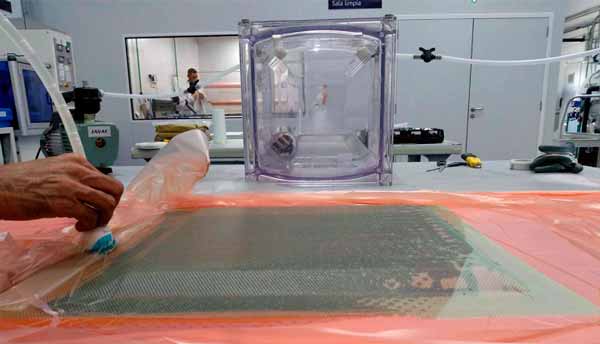
To achieve this, Titania engineered a service portfolio that encompassed materials testing (metals, sealants, surface treatments, coatings, etc.), industrial project engineering and consulting (tooling design, machining, materials bonding, inspections, etc.), and the manufacturing of test panels (both in metals and composites).
Business Model
Titania expanded organically within Spain, capturing significant market share in the aerospace sector. While its primary accounts are major aircraft manufacturers (OEMs) like Airbus, the company successfully diversified its client base by onboarding Tier 1 aerospace suppliers. These strategic suppliers develop the specialized materials for aircraft production, anchoring the extensive supply chain that sits in between.
To differentiate itself from competitors, Titania heavily invested in establishing a comprehensive one-stop-shop service model. While most competing firms specialize in a single analytical technique or a narrow range of materials, Titania addresses not only an extensive variety of testing methods and advanced materials but also peripheral process activities. These include operations such as coating, machining, riveting, and composite manufacturing. In other words, Titania possesses the technical infrastructure to analyze virtually every single material required to build an aircraft, spanning metals, sealants, and coatings. This strategic positioning ensures clients perceive Titania as an end-to-end partner capable of managing complex, highly technical projects. Consequently, clients can avoid the operational friction of sourcing multiple laboratories, as Titania consolidates the entire testing cycle in-house.
Titania’s operational framework was significantly reinforced in 2013 when the company pivoted toward a highly advanced, proprietary management software system. This enterprise platform enables them to oversee operations remotely and centrally, optimizing resource allocation while driving down operational costs. According to Fernando Serrano, Head of Business Development at Titania: “Through this system, we can visualize the company’s entire pipeline and track our lead times and delivery schedules in real time“.
Such a massive volume of data is only sustainable through a strictly paperless operation. Their central management software allows the team to work seamlessly through agile, coordinated networks, automating complex mathematical calculations and generating compliance reports directly from the raw data streams captured during physical testing.
Recognizing that operational excellence must be validated by the market, Titania has continuously prioritized the highest standards of quality assurance. This commitment has materialized in an extensive portfolio of international accreditations, certifications, and OEM approvals, which have unlocked expansion opportunities into new global markets and adjacent industrial sectors.
Furthermore, Titania is strongly committed to human capital development and local community engagement. In 2014, the company was recognized as one of the top 20 SMEs to work for. As part of its Corporate Social Responsibility (CSR) policy, the firm actively collaborates with a wide range of organizations supporting underprivileged groups, an impact that has been recognized with multiple corporate awards highlighting their social commitment.
R&D and Innovation at Titania
Since its incorporation, Titania has executed an ambitious capital expenditure (CapEx) strategy, allocating at least 10% of its annual budget to acquiring cutting-edge machinery and implementing operational process optimizations. Complementing this internal investment, Titania has consistently maintained active participation in high-stakes aerospace R&D projects. The company has garnered international recognition for its research in eco-friendly surface treatments, composite materials manufacturing, Industry 4.0 technologies, and renewable energy systems.
A prime example of this commitment to innovation is its participation in Clean Sky 2, Europe’s largest aeronautical research initiative aimed at drastically reducing the environmental footprint of aviation technologies. Furthermore, Titania maintains deep-seated ties with the University of Cádiz, funding research programs and systematically onboarding academic researchers into its corporate structure.
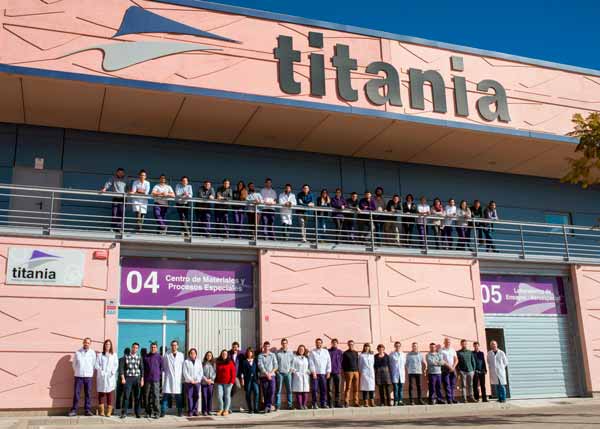
To anchor its long-term growth trajectory, Titania launched a new, state-of-the-art R&D center in 2022 within its TecnoBahía facilities. Backed by these next-generation infrastructures, the company scaled its headcount to 60 highly skilled professionals by 2022. Today, its extensive B2B portfolio encompasses over 500 companies operating across 26 countries on four continents.
The Internationalization of Titania
Titania emerged with a distinctly local focus during its initial phase. The team initially concentrated on meeting the operational demands of CASA and EADS (Airbus) at their Cádiz facility. From there, they scaled their operations to service the Airbus plant in Seville, alongside the regional aerospace supply chain ecosystem. The subsequent strategic step was to onboard accounts throughout the rest of Spain.
It was not until 2012 that the company began secure international contracts. In 2013, management engineered an action plan designed to position Titania as an international benchmark center for aerostructures manufacturers. Driven by this program, the company successfully integrated its services into various Airbus group plants worldwide and began negotiating directly with aerospace materials manufacturers.
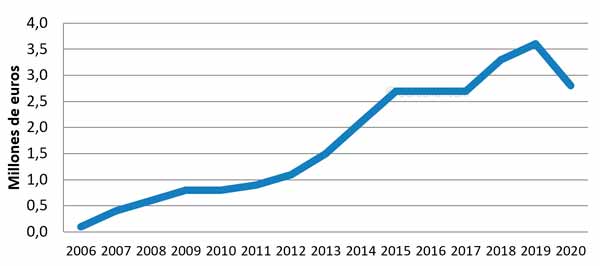
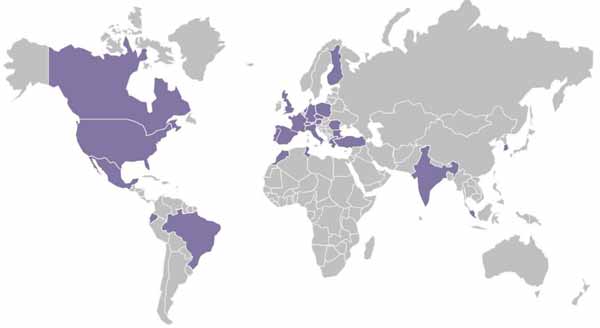
Consequently, three years later, international revenue accounted for 8% of the company’s total income, and within a few years, international billing surpassed domestic sales. Titania progressively expanded its global footprint, establishing a commercial presence across 23 countries in Europe, the Americas, Africa, and Asia. Beyond Spain, their primary contract pipelines flow from European countries where Airbus operates its main manufacturing hubs, namely France, Germany, and the United Kingdom. However, the company has also solidified a strong market presence in other key regions, including the United States, the Netherlands, Malaysia, Canada, India, Brazil, and Morocco.
This internationalization process was accelerated by two pivotal strategic choices. In 2017, Titania opted to diversify and extend its capabilities into adjacent heavy industries, such as the naval, metallurgical, and wind energy sectors. Furthermore, in 2018, the company opened a commercial office in Oxford, United Kingdom. These initiatives were reinforced by aggressive international market prospecting through active participation in global industry events and aerospace scientific congresses.
This entire global expansion has been underpinned by an unwavering commitment to securing all the international certifications, accreditations, and OEM approvals required by the regulatory frameworks of the countries where it operates. To illustrate the scope of their compliance infrastructure, their portfolio includes credentials from: European Quality Assurance Spain (EQA Spain), the National Accreditation Body of Spain (ENAC), the National Aerospace and Defense Contractors Accreditation Program (Nadcap Management Council), Airbus, SAS, Boeing, Airbus Defence and Space, Airbus Helicopters, Embraer (Empresa Brasileira de Aeronáutica, S.A.), Bombardier, Sikorsky, and Airbus Canada.
Undoubtedly, these industry approvals have been a powerful catalyst for Titania’s corporate prestige, endowing the firm with the high level of technical credibility and market reputation required to secure high-value international contracts.
Conclusions on the Titania Story
Academic spin-offs offer a unique set of strategic advantages for both the academic community and the business world. First and foremost, these companies enable the highly effective transfer of knowledge and technology from universities to the private sector, streamlining the commercialization of breakthroughs and scientific research. By operationalizing university-led R&D, academic spin-offs translate promising laboratory insights into tangible products and services that deliver broad societal value.
Titania stands as a definitive benchmark for university-born entrepreneurial success. Quite simply, the company could not have existed without its academic foundation. The university provided the foundational research reputation of its scholars, which endowed the venture with immediate market credibility and fostered the deep corporate trust required by the aerospace industry.
The University of Cádiz was not only the catalyst and incubator for this enterprise but has also consistently fueled its growth through a steady talent pipeline of its graduates. In fact, the vast majority of the university-educated professionals working at Titania earned their degrees at the University of Cádiz.
The ultimate outcome of this academic legacy is a global corporate footprint: Titania currently services accounts across 23 countries, and its state-of-the-art facilities are certified to operate for the world’s elite aircraft manufacturers (including Airbus in Europe, Boeing in the US, Bombardier in Canada, and Embraer in Brazil). Globally, only about 100 highly specialized laboratories are approved to work with these aerospace OEMs. Within this exclusive network, Titania ranks as the third-largest laboratory in the world by volume of approved testing capabilities for Airbus, and the second-largest for Bombardier. It is a textbook example of entrepreneurial and technological success.
Further Information
This article has summarized the story of Titania, the Cadiz-based engineering firm that protects critical infrastructures in more than 30 countries. I hope you found it insightful. If you are seeking inspiration or are interested in these topics, this blog features a wide array of related content. Please feel free to use the search bar located in the header.
Additionally, here are a few other articles that may be of interest: