
What if anyone could create interactive content as compelling as the work produced by the world’s most prestigious design studios? That seemingly simple question took root in the mind of Juan Rubio as he watched clients at Ecoavantis pay substantial sums just to change a color or update an animation in their interactive presentations. What began as an experimental project in 2015 evolved into Genially, a platform now used by more than 30 million people across 190 countries, challenging industry giants such as Microsoft and Google while redefining how educators, communicators, and professionals around the world present their ideas. This is the Genially Story, or how three entrepreneurs from Córdoba transformed visual communication on a global scale.
The convergence of three complementary talents became the catalyst for the company’s success. Juan Rubio brought an entrepreneurial vision shaped by his previous experience in environmental consulting. Chema Roldán, a software engineer with a background at multinational technology companies, built the scalable technical architecture. Luis García, a visual communication specialist and founder of the creative agency Fugazzz, had a deep understanding of both the market’s limitations and the real needs of content creators. Together, these three entrepreneurs from Córdoba approached the same problem from different perspectives, creating a synergy that proved extraordinarily effective.
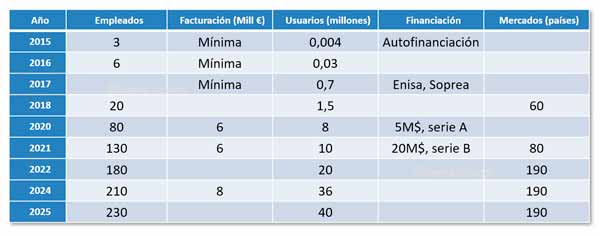
From its humble beginnings, driven by long hours and relentless dedication, Genially attracted strategic investment at pivotal moments in its journey. Early backing from public funding programs and experienced angel investors such as Javier Sánchez-Marco provided the momentum needed to gain traction. In 2016, the company’s selection by Founder X in Silicon Valley as one of the world’s 40 most promising startups opened the door to international markets. The real turning point came in 2020 and 2021, when Genially raised $5 million in a Series A funding round, followed by $20 million in a Series B round. These investments transformed Genially from a regional startup into a global company.
What makes Genially’s story remarkable is not simply the amount of capital it raised or the size of its user base, but its unwavering commitment to building a product-led business. From the outset, the platform itself served as the company’s primary growth engine. Genially identified a largely overlooked opportunity: democratizing interactive visual content. Its freemium model enabled millions of users to experience the product without purchasing barriers, creating a viral growth loop that no traditional marketing budget could have replicated.
The pages that follow tell the story of how three entrepreneurs from Córdoba recognized an opportunity where others saw only commoditized products, overcame the challenges of international scaling, and built a company that not only transformed the interactive communication industry but also redefined what an accessible digital platform can achieve on a global scale.

The Founders of Genially
The success of any startup never happens by chance. It is the result of complementary talents coming together, diverse professional experiences, and a shared vision shaped through previous entrepreneurial journeys. At its core, the story of Genially is the story of three entrepreneurs from Córdoba who came together at exactly the right moment. Each brought unique perspectives, expertise, and strengths that proved essential in creating a new way of delivering value to the education and business communication sectors.
The three friends were born and raised in Córdoba in middle-class families. Although their early ambitions led them down different paths, their journeys ultimately converged in the same entrepreneurial venture.
- The Visionary: Juan Rubio López (Córdoba, Spain, 1982) developed a strong interest in the natural sciences from an early age. He began studying Biology at the University of Córdoba before completing his degree at the Autonomous University of Madrid. This academic background proved influential not only because it gave him a solid grounding in the scientific method, but also because, as he has explained in numerous interviews, it taught him a systems-thinking approach that he would later apply to building and managing businesses. He further expanded his education with a Master’s degree in Wildlife Management and Conservation from the International University of Andalusia (UNIA), specializing in environmental management and sustainability.
After graduating, he worked at the Spanish National Research Council (CSIC), Parks Victoria in Australia, and the Andalusian Youth Institute. In 2007, at just 25 years old, he founded Ecoavantis, a consultancy specializing in environmental communication and sustainability.
While leading Ecoavantis, Juan identified a critical market gap. The interactive content his clients needed was expensive to produce, difficult to update, and accessible only to organizations that could afford specialized development teams. Recognizing this unmet need planted the seed that would eventually become Genially. - The Engineer: José Manuel “Chema” Roldán Marín (Córdoba, Spain, 1984), better known as Chema, studied Computer Engineering at the University of Córdoba. He began his career as a software developer at Captative and Vector Software Factory before joining Avanade, the global technology consulting and professional services company.
During his seven years at Avanade, Chema led multidisciplinary teams, developed complex enterprise software solutions, and refined his ability to translate business requirements into scalable technical solutions. He also had a personal connection with Juan: Chema had attended school with Juan’s wife, and they shared several mutual friends. - The Communicator: Luis García Díez (Córdoba, Spain, 1984) studied Advertising and Public Relations at the University of Málaga before continuing his education with a Master’s degree in Corporate Communications and Public Relations at the Autonomous University of Barcelona, as well as completing a program at Fordham University in New York.
He began his career in marketing and communications before co-founding the visual communication agency Fugazzz in 2010, specializing in high-impact visual content. During this period, he honed his expertise in creating interactive and animated content that increased audience engagement and strengthened brand recall. He also recognized that while demand for interactive visual content was growing rapidly, the available tools remained far beyond the reach of most users without specialized technical skills.
Luis already knew Juan through entrepreneurship workshops they had both attended, and they had previously collaborated on sustainability communication projects.
The three entrepreneurs came together naturally. They all shared roots in Córdoba, were active in the city’s entrepreneurial ecosystem, and although their careers had evolved through different disciplines, technology, design, and communication, they had all reached the same conclusion: creating engaging visual content should be far more accessible than it was.

The Origins of the Idea
The idea behind Genially was not born in a single flash of inspiration. Instead, it gradually took shape in Juan Rubio’s mind while he was running his consulting firm, Ecoavantis. Time and again, after presenting interactive content commissioned by clients, they would ask how they could make changes themselves. Those recurring conversations led Juan to begin developing the concept of a tool that would allow anyone to edit and create interactive content without relying on specialized developers.
At the time, Chema was working in Madrid in the field of cloud computing and had been looking for an opportunity to return to Córdoba. Juan knew the project needed a technical co-founder. When he shared the idea with Chema, the decision came easily. “From day one, I could see it was an innovative project with ambitious goals. Looking back, I think it was one of the best decisions of my life“, Chema recalls. Together, they approached Luis to invite him to join the venture. “One day the two of them showed up at my office. I had no idea what they were about to tell me. At first, I barely understood the concept. But after giving it some thought, I said, ‘Why not?’“.
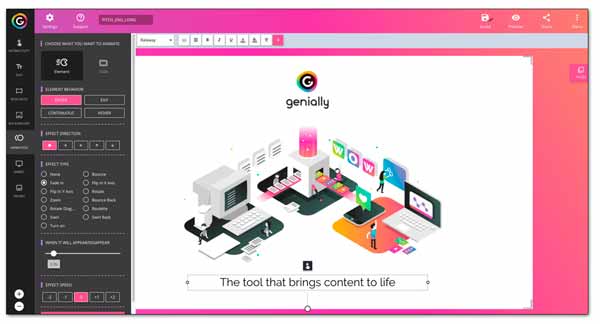
Their goal was to build a comprehensive online platform that was intuitive enough for anyone to use while powerful enough to create high-quality interactive and animated content. The platform would enable users to produce interactive presentations, infographics, maps, visual designs, microsites, and many other types of digital content. Their vision was to make communication more engaging and impactful. As the founders themselves describe it, their mission was to democratize the creation of interactive content by removing the technical barriers that had traditionally limited access.
At the time, simple presentation tools such as Microsoft PowerPoint and Google Slides already existed, but they offered only limited interactive capabilities. At the other end of the spectrum, professional software such as Adobe Creative Suite was extremely powerful but also highly complex. Genially was conceived to fill the gap between these two worlds: a platform simple enough for anyone to use, yet powerful enough to create truly innovative interactive experiences.
In March 2015, the three founders officially incorporated Genially Web S.L. in Córdoba. As expected, responsibilities were divided according to each founder’s expertise: Juan Rubio became Chief Executive Officer (CEO), Chema Roldán assumed the role of Chief Technology Officer (CTO), and Luis García became Chief Marketing Officer (CMO), leading the company’s creative and marketing strategy.
The Early Days of Genially
Like many startups, Genially’s early months were defined by a small team, limited resources, long hours in shared workspaces, and an unwavering determination to turn an ambitious idea into reality. Although Juan Rubio remained involved in leading Ecoavantis for several months, Luis García and Chema Roldán dedicated themselves full-time to the new venture. As Chema later recalled: “Our initial capital was basically our own salaries, very, very modest, just enough to get by until we could launch the first version and see whether the market would embrace it“.
The team’s immediate priority was to develop a minimum viable product (MVP) that would allow users to create interactive content without writing a single line of code. Their focus was on usability and on designing templates that would enable users to produce more engaging content quickly and affordably. Luis remembers those first milestones clearly: “We launched a beta version in May, and by September we had started our marketing efforts. By September 2015, we already had 4,000 users“. Those early adopters played an important role in shaping the platform, providing valuable feedback that helped the team continuously refine the product.
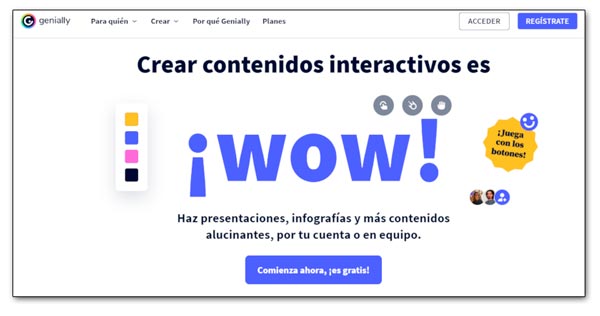
Although the founders initially promoted the platform through educational networks, most of its early growth came through word of mouth. Its ease of use and the tangible value it delivered encouraged users to share their creations and recommend the platform to colleagues. Many of Genially’s first users were educators, marketers, and communication professionals who discovered the platform through the founders’ personal social media networks.
For a young startup, Genially achieved remarkably strong organic growth. The platform expanded from just a handful of users during its first months to hundreds by the end of its first year. Because it was built as a cloud-based, highly scalable service, the company did not need a physical presence in international markets to attract users abroad. By the end of 2015, Genially already had users in multiple countries, although Spain remained its primary market.
As the company grew, so did the team. New developers, designers, and specialists were hired carefully, with the founders placing great emphasis on finding people who shared the company’s vision and culture. By the end of 2016, Genially had grown to a team of eight employees.
The First External Funding
It did not take long for the founders to realize they were building the right business model. In 2016, just one year after its launch, Founder X, a Silicon Valley startup accelerator, selected Genially as one of the 40 most promising startups in the world. It was an extraordinary achievement: a Spanish company from Córdoba, a city far less internationally recognized than Madrid or Barcelona, had earned global recognition as one of the most promising ventures in the emerging technology ecosystem.
This distinction was far more than symbolic. Founder X’s endorsement gave credibility to Genially’s product and vision in the eyes of international investors, the media, and potential enterprise customers. Soon afterward, educational institutions, multinational corporations, and communication agencies began reaching out with interest in adopting the platform. The recognition acted as a powerful catalyst: every mention in the technology press and every appearance at international startup and technology conferences further increased Genially’s visibility.
Having demonstrated both product-market fit and strong user growth, the founders decided it was time to seek external funding to accelerate the company’s expansion. Fortunately, Spain offered several public financing programs designed to support innovative technology startups. In 2017, Genially secured funding through ENISA (Spain’s National Innovation Company) and SOPREA (the Andalusian Society for Economic Promotion and Restructuring). Although the exact amounts were never disclosed, these participatory loans provided critical growth capital while allowing the founders to avoid diluting their ownership.
In addition to public funding, a friend of Juan Rubio introduced him to Javier Sánchez-Marco. Originally from Seville, Sánchez-Marco had worked at the gaming startup Genera Games before founding the companies Eventoprix and Furgo. He later became an angel investor, making one of his earliest investments in the delivery app Glovo in 2015, years before it achieved unicorn status. As Javier himself recalls: “It was love at first sight. Juan had three of the qualities I value most in the startup ecosystem: humility, a relentless work ethic, and a truly differentiated product. The result? A winning horse“.
In April 2017, Javier Sánchez-Marco became not only an investor in Genially but also an important mentor and a key strategic advisor during the company’s next stage of growth.
Controlled Organic Growth
Between 2017 and 2019, Genially experienced steady, sustainable growth rather than explosive expansion. The team grew to 15 employees in 2018 and reached 40 by 2019. Its user base continued to expand organically, driven primarily by word-of-mouth recommendations and rapid adoption within educational communities across Latin America.
During this period, Genially opened offices in several Spanish cities to broaden its access to talent and strengthen relationships with large enterprises and regional governments. At the same time, the company’s product strategy continued to evolve. Beyond interactive presentations and infographics, the platform expanded to support more specialized formats, including interactive reports, interactive maps, gamified quizzes, immersive learning experiences, and other solutions tailored to specific use cases. This broader product offering significantly expanded Genially’s total addressable market.
In 2018, Juan Rubio received the Entrepreneur XXI Award in the Digital Business category, presented by CaixaBank through Caixa Capital Risc. The award included a €25,000 cash prize and gave him the opportunity to participate in an international executive program on exponential growth at Singularity University. The recognition further reinforced Genially’s growing reputation within Spain’s entrepreneurial and innovation ecosystem.
Accelerating Global Expansion
The year 2020 marked a turning point for Genially, and for the world. The company faced a pivotal strategic decision: continue with steady, organic growth or accelerate aggressively to seize a once-in-a-generation opportunity. Choosing the more ambitious path, Genially closed a $5 million Series A funding round in February 2020. A Series A round is typically the first significant venture capital investment a startup receives after validating its business model and demonstrating product-market fit.
The round was led by experienced institutional investors, including JME Ventures, GP Bullhound, a growth fund specializing in SaaS companies, Market One Capital, Athos Capital Fund, and FJ Labs. It also attracted prominent angel investors such as Félix Ruiz, co-founder of Tuenti and Jobandtalent, among other successful ventures. As Juan Rubio explained: “This new injection of capital will support our ambitious expansion plans over the coming months. We are delighted to have successfully closed this round with backing from prestigious international investors“.
With fresh capital on its balance sheet, Genially decided to establish an office in New York City. Although its largest markets at the time were Spain, Mexico, and Colombia, the founders believed that having a physical presence in one of the world’s leading technology and business hubs would strengthen Genially’s credibility as a global company, improve its ability to attract international talent, and facilitate relationships with Fortune 500 corporate customers in the United States. In practice, the New York office became the launchpad for Genially’s expansion across North America.
The COVID-19 pandemic proved to be a powerful catalyst. As schools, universities, and businesses were suddenly forced to transition to digital environments, educators discovered that Genially offered a far more engaging alternative to PowerPoint and Google Slides for capturing attention in virtual settings. As a result, many adopted the platform to create interactive learning experiences for remote education.
User growth accelerated dramatically. By 2020, approximately 80% of Genially’s users were educators, students, or professionals working in the education sector.
The company also made a strategic discovery. Although Genially had originally been designed with corporate users and marketing professionals in mind, the founders realized that its greatest opportunity for large-scale adoption lay in education. This strategic repositioning became one of the defining decisions in the company’s growth story.
The Turning Point: Series B
At this stage, who would want to slow the momentum?
In September 2021, Genially took another major step forward by announcing the successful closing of a $20 million Series B funding round. A Series B round typically takes place once a startup has established a sustainable business, generates recurring revenue, and has demonstrated that its model can scale successfully.
Unlike the Series A round, which was led primarily by European investors, the Series B round was spearheaded by two U.S. venture capital firms: 645 Ventures, a New York-based investor specializing in global Software-as-a-Service (SaaS) companies, and Owl Ventures, a Silicon Valley firm focused exclusively on education technology (EdTech). Owl Ventures brought not only capital but also deep expertise in the education market, its competitive landscape, and the growth opportunities available to companies operating in the sector.
The round also included participation from several existing investors, including JME Ventures, GP Bullhound, Market One Capital, and Athos Capital. New investors joined as well, including s16VC and the co-founders of Kahoot!, the gamified learning platform that grew into a multibillion-dollar company. Their involvement was particularly meaningful, as Kahoot! had followed a growth trajectory similar to Genially’s, building an educational product that started with a simple concept before achieving global impact.
A $20 million investment creates opportunities to think much bigger. For Genially, the Series B round represented a genuine inflection point, providing the resources needed to pursue several strategic initiatives:
- Expanding in strategic markets. Although Genially already had users in 180 countries, its presence in key markets such as the United States, Brazil, France, and Italy remained relatively limited. The Series B funding enabled the company to establish dedicated teams in those regions.
- Accelerating product development. With a larger team of engineers and designers, Genially could invest in more ambitious product innovations, introduce advanced capabilities, improve platform performance, and deepen integrations with widely used enterprise tools such as Microsoft Teams, Google Classroom, and Slack.
- Growing enterprise sales and customer acquisition. While the education sector accounted for approximately 80% of Genially’s users, it represented only about half of the company’s revenue. Expanding its corporate customer base became essential for diversifying revenue streams and increasing Average Revenue Per User (ARPU).
- Recruiting world-class talent. Greater financial resources allowed Genially to compete for highly experienced engineers, designers, and business leaders, building a team capable of supporting its global ambitions.
When asked about the significance of this funding round, Juan Rubio emphasized that the capital itself was not the most valuable aspect of the deal. What mattered most, he explained, was the strategic value the investors brought through their experience, networks, and deep understanding of global markets. Capital without that added value, he argued, offers only limited long-term benefits.

International Expansion Strategy
Having secured significant funding, Genially was in a much stronger position to accelerate its international growth. One of the primary objectives of the Series B round was to expand geographically. By analyzing factors such as market size, the adoption of educational technology, and potential regulatory barriers, the company identified several strategic priority markets:
- Latin America. Mexico, Colombia, Argentina, Ecuador, and other Spanish-speaking countries represented particularly attractive opportunities. The education sector across the region showed strong demand for modern communication and learning tools like Genially. To support this expansion, the company established offices in Mexico and Chile to coordinate its growth strategy throughout the region. By 2021, Genially had approximately 6 million users in Latin America and expected that number to grow significantly in the years ahead.
- France, Spain, and Italy. In these European markets, Genially saw an opportunity to substantially increase revenue per user, particularly among professional and enterprise customers. To accelerate adoption, the company invested in local teams and marketing initiatives tailored to each market.
- United States. The U.S. had always been one of Genially’s most challenging markets. Competition from established players such as Microsoft, Google, and Canva, combined with longer enterprise sales cycles, made expansion more demanding. To strengthen its position, Genially expanded its New York office by recruiting sales executives with deep experience in the education sector, where EdTech adoption was already well established.
While these markets received the greatest investment, Genially did not lose sight of the rest of the world. The company continued expanding its international footprint, particularly in countries with dynamic education sectors and strong purchasing power, including Australia, Canada, and Singapore. Over time, Genially established a presence in more than 190 countries worldwide.
The Freemium Business Model
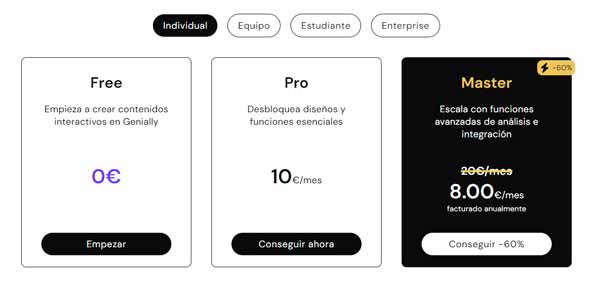
Genially operates on a freemium business model, allowing users to create interactive content at no cost while placing certain limits on features, storage, and analytics. To unlock the platform’s full capabilities, users can upgrade to one of its paid subscription plans.
The pricing strategy is built around three main tiers:
- Free. A free plan designed for users who want to explore the platform, with access to core features but certain limitations.
- Pro. A monthly or annual subscription aimed at individual users with more advanced needs. This plan is particularly popular among educators and marketing professionals.
- Enterprise. Tailored solutions for large organizations and educational institutions. Typical customers include corporate marketing, communications, and human resources departments, as well as schools, universities, and other educational organizations.
Overall, the education sector accounts for approximately 80% of Genially’s user base, yet generates around 50% of the company’s revenue. Corporate customers, by contrast, represent only about 20% of users while contributing the remaining 50% of revenue. This illustrates that Genially’s success has never been driven solely by user volume. Instead, the company has carefully balanced extensive growth, expanding its user base, with intensive growth, increasing revenue generated by higher-value enterprise customers.
When Genially entered the content creation market, it faced several well-established competitors:
- Microsoft PowerPoint, the corporate standard, but with relatively limited interactive capabilities.
- Google Slides, simple, free, and collaborative, yet lacking advanced interactivity.
- Prezi, focused on storytelling through dynamic presentations.
- Canva, the leader in democratizing graphic design, but less specialized in interactive experiences.
- Adobe Creative Cloud, extremely powerful, but also significantly more complex and expensive.
Genially differentiated itself through a clear value proposition: making interactive and animated content accessible to users without technical expertise. Just as Canva democratized graphic design, Genially democratized interactive content creation. This positioning proved especially valuable in the post-pandemic environment, when digital learning and online engagement became strategic priorities for educational institutions and organizations alike.
Genially did not compete primarily on price, its pricing was broadly comparable to that of its competitors. Instead, it differentiated itself through the strength of its product, the engagement of its user community, and its deep specialization in education. This was the result of deliberate product decisions, including educator-focused templates, integrations with Learning Management Systems (LMS), and advanced gamification capabilities.
Beyond its commercial success, Genially has transformed the way millions of educators present lessons, how organizations communicate with employees, and how students engage with learning. Institutions such as Columbia University, the University of Oxford, the International Red Cross, Telefónica, and Louis Vuitton are among the organizations that have used the platform.
Interest from the Education and Corporate Sectors
When asked about Genially’s remarkable success in education, Juan Rubio has often replied: “The original idea was to build a tool for marketers and communication professionals. We never imagined it would become so successful in education“.
Even so, Genially’s impact on education has become one of the most widely discussed chapters of the company’s history. Beyond user numbers, its real value in schools and training institutions lay in its ability to simplify educators’ work while making learning experiences more engaging and interactive.
Teachers who had previously relied on linear slide presentations began creating interactive lessons, self-paced learning activities, and formative assessments. Traditional presentations evolved into interactive learning environments where students could explore content, receive immediate feedback, and actively participate in the learning process. To encourage this transformation, Genially invested heavily in teacher enablement through webinars, online courses, and a growing library of shared templates. These initiatives fostered an active community of educators who exchanged teaching resources, reusable templates, and classroom best practices.
According to Genially, its platform has been widely used in both primary and secondary education to explain concepts, create interactive quizzes, and develop instructional materials. In higher education, instructors have used it to present case studies, simulations, and supplementary course content. Beyond formal education, the platform has also become a valuable tool for MOOCs, professional training, and corporate learning programs, helping organizations produce more engaging learning experiences with higher course completion rates.
The outcome was reflected in educators’ own experiences. Many reported higher levels of student engagement and a greater willingness among learners to participate in collaborative projects. Adoption, however, was not instantaneous. Teachers needed time to discover the platform’s full potential, supported by professional development opportunities and thoughtful integration into curriculum design.
Although education represents Genially’s largest user segment, the company’s highest-value customers are found in the corporate sector. Human resources teams use the platform to develop employee training and onboarding materials, while sales organizations create persuasive presentations that help differentiate their offerings during the sales process.
Marketing teams have also embraced Genially as a powerful communication tool. Interactive formats have proven particularly effective for product storytelling, visual reporting, and creating content that is more likely to be shared across social media. Compared with traditional static documents, interactive content consistently delivers higher levels of audience engagement.
Leadership Structure and Management Team
As one might expect, Genially’s success has been driven by the leadership of its executive team and the talent of its employees. Under the leadership of Juan Rubio as CEO, the company developed an organizational structure built around clearly defined responsibilities:
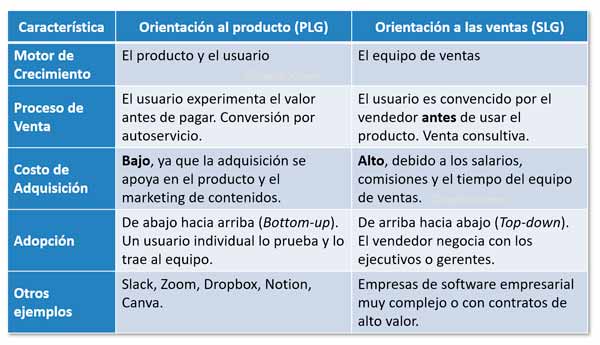
- Juan Rubio López, CEO and Co-founder. As Chief Executive Officer, Juan Rubio is responsible for defining Genially’s long-term vision and strategic direction. His leadership has been strongly influenced by a Product-Led Growth (PLG) philosophy, a business strategy in which the product itself becomes the primary driver of customer acquisition, user engagement, and retention, rather than relying primarily on a traditional sales organization. This approach contrasts with the more conventional Sales-Led Growth (SLG) model, where business growth depends largely on direct sales efforts.
- Chema Roldán, CTO and Co-founder. As Chief Technology Officer, Chema Roldán leads the company’s engineering organization, overseeing platform architecture, cloud infrastructure, and product development. From the beginning, his priority has been scalability and operational efficiency, ensuring that Genially can reliably serve more than 30 million users while maintaining a consistent, high-quality user experience.
- Luis García Díez, CMO and Co-founder. As Chief Marketing Officer, Luis García oversees marketing, communications, and commercial strategy. Drawing on his background in visual communication, he has played a key role in shaping both Genially’s product positioning and its go-to-market strategy across different regions. His objective has been to ensure that Genially consistently practices what it promotes: compelling visual communication, engaging interactive experiences, and clear, effective messaging.
Following the Series B funding round, Genially also strengthened its executive leadership by recruiting experienced leaders from established companies. These included Miguel Meca, who joined as Chief Financial Officer (CFO), bringing extensive financial and scaling expertise; Alberto López Rey, appointed Chief Business Development Officer (CBDO), responsible for strategic partnerships and business development; and Manuel Vida Carrión, who became Chief Product Officer (CPO), leading product innovation with a strong customer-centric approach. The company also expanded its leadership in engineering, marketing, and operations with additional senior specialists.
Beyond its internal leadership team, Genially has benefited from mentorship and strategic partnerships with prominent figures from both the Spanish and international startup ecosystems. Among them are Javier Sánchez-Marco, the founders of Kahoot!, and venture capital firms that have supported the company at different stages of its growth, including GP Bullhound, Brighteye Ventures, and DN Capital.

Conclusions
Genially’s journey offers an outstanding collection of lessons on how to build globally scalable technology companies in highly competitive markets. Beyond being a story of entrepreneurial and financial success, the experience of Juan Rubio, Chema Roldán, and Luis García provides valuable insights into business strategy, product innovation, and adaptive leadership that are relevant to entrepreneurs, investors, and executives alike.
Several key lessons emerge from Genially’s success:
- Solve a real problem, not a problem invented to fit a solution. Genially did not begin with the question, “What app could make us money?” Instead, it started with a much more powerful one: “What recurring problem frustrates us in our daily work?” While running Ecoavantis, Juan Rubio experienced firsthand the challenges of producing interactive content that was expensive to create and difficult to update. That direct observation proved far more valuable than any market research report.
- Complementary founding teams outperform individual brilliance. One of the reasons Genially succeeded where similar projects failed was the unique combination of skills brought together by its three founders. Juan Rubio contributed entrepreneurial vision and commercial leadership, Chema Roldán provided technical excellence and scalable product architecture, and Luis García brought expertise in design, communication, and creative markets. None of them could have built Genially alone.
- A product-led freemium model can become a powerful growth engine. Offering free access enabled educators, students, and communication professionals to experience the platform without purchasing barriers. Satisfied users naturally became advocates, creating a viral growth cycle that reduced dependence on large marketing budgets.
- Strategic capital is more valuable than abundant capital. Genially raised approximately $25 million from external investors while remaining highly selective about whom it partnered with. The founders were looking for more than funding, they sought investors who could contribute international networks, operational expertise, market knowledge, and access to potential customers.
- Owning a niche is often more powerful than pursuing a broad market. Rather than positioning itself simply as an alternative to PowerPoint or Canva, Genially focused relentlessly on a specific opportunity: democratizing interactive content creation. That specialization became a competitive advantage. A well-defined niche, successfully dominated, can create more value than competing across multiple broad markets against larger, better-established players.
- Capital discipline matters. Unlike many startups that prioritize growth at any cost, Genially remained disciplined in the way it deployed capital. In 2024, Juan Rubio announced that the company had become profitable, generating more revenue than expenses. This financial discipline gave Genially greater strategic independence, allowing it to continue growing without relying on continuous fundraising or sacrificing profitability for short-term expansion.
- External opportunities favor companies that are prepared. The COVID-19 pandemic dramatically accelerated the adoption of digital learning and collaboration tools. Remote work also drove corporations to seek new digital communication solutions. Yet favorable market conditions alone do not guarantee success. Many EdTech companies faced the same opportunity but failed to survive. Genially succeeded because it entered that period with a strong product, a receptive market, and a capable team ready to scale.
- Choosing the right growth strategy shapes every subsequent decision. Whether a company adopts a Product-Led Growth (PLG) or a Sales-Led Growth (SLG) strategy influences hiring, investment priorities, customer acquisition, and performance metrics. Genially deliberately chose the product-led path. That meant investing in product development, user experience (UX), documentation, and community building rather than prioritizing large sales organizations. Neither approach is inherently superior, the key is selecting the one that best fits the company’s product, market, and long-term objectives.
Genially’s story stands out not only because of the success it achieved, but because of the way that success was built: through a sustainable and profitable business, a highly engaged team, and disciplined execution in a fiercely competitive industry. For entrepreneurs, executives, and investors seeking practical lessons, Genially demonstrates that hypergrowth is not the only path to building a world-class company, even if it has worked for businesses such as Netflix or Uber. Instead, the company focused on building an exceptional product, dominating a clearly defined niche, attracting the right users, raising strategic capital at the right moments, and expanding internationally with discipline and purpose.
Looking ahead, several paths remain open. Genially could one day become an acquisition target for companies such as Microsoft, Salesforce, or Google. It could also pursue an initial public offering (IPO). Or it may continue writing its own story as an independent global company, shaping the future of how people communicate, teach, and learn. Whatever its next chapter, Genially already stands as a compelling example of how local entrepreneurs with global ambitions can build companies with worldwide impact.
Further Information
This article has summarized the Genially Story or how three young entrepreneurs revolutionized visual communication worldwide. If you are seeking inspiration or are interested in these topics, this blog features a wide array of related content. Please feel free to use the search bar located in the header.
Additionally, here are a few other articles that may be of interest:
- The Scalpers Story: From Bespoke Tailoring to Global Fashion Powerhouse
- The Titania Story: Rigor, Science, and Passion at the Service of Aerospace Manufacturing
- The Smartick Story: How AI is revolutionizing mathematics learning
Bibliography
Although the content of this blog is intended for educational and informative purposes, we take data verification very seriously. Our articles are the result of interviews with key figures and industry experts, as well as meticulous research across official sources, media outlets, scientific publications, and in-depth reports. Because of this, the stories we share are often recognized by their own protagonists as highly accurate. In any case, if you spot any errors or inaccuracies, we would be incredibly grateful if you could leave a comment at the end of the article or let us know at blog@carballar.com.
However, as a non-profit, educational blog, we operate with a lean approach, which means we cannot dedicate the time required to exhaustively reference every single piece of data presented. Nevertheless, should you need to verify any of the figures or information, we have attached some of the primary sources utilized below. Please keep in mind that, since this is a Spanish company, the majority of these sources are in Spanish.
- A presentation experience that brings content to life. Finally. GP Bullhound, revisado en diciembre 2025. https://www.gpbullhound.com/articles/genially/
- Cómo usar Genially: primeros pasos. Genially, revisado en diciembre 2025. https://www.youtube.com/watch?v=adifpx44eh4
- Desde la ONU a un colegio, así son los clientes de Genially, la plataforma digital con 40 millones de usuarios en el mundo. El Correo de Andalucía, revisado en diciembre 2025. https://www.elcorreoweb.es/economia/2025/07/22/onu-colegio-son-clientes-genially-119925773.html
- El Éxito de Genially: De Startup a Plataforma Global con Millones de Usuarios. Géiser, revisado en diciembre 2025. https://www.youtube.com/watch?v=sRoP_pvDvKA
- Entrevista al ganador de los Premios EmprendedorXXI en la categoría de Negocios Digitales. Emprendedor XXI, revisado en diciembre 2025. https://www.emprendedorxxi.es/en/entrevista-al-ganador-de-los-premios-emprendedorxxi-en-la-categoria-de-negocios-digitales/
- Entrevista completa a Juan Rubio, CEO de Genially. DayOne Premios EmprendeXXI, revisado en diciembre 2025. https://www.youtube.com/watch?v=mS9OHn5AZAI&t=18s
- Entrevista N&B a los fundadores de Genially. Cordópolis, revisado en diciembre 2025. https://www.youtube.com/watch?v=x8hmxLqDJpc
- Juan Rubio: «Estamos liderando una nueva generación de contenidos». Diario de Córdoba, revisado en diciembre 2025. https://www.diariocordoba.com/cordoba-ciudad/2020/02/23/juan-rubio-liderando-nueva-generacion-36057319.html
- Genial.ly. Actua Solutions, revisado en diciembre 2025. https://actuasolutions.com/en/proyectos/genially-academy-an-online-training-platform-for-customers-reaches-100000-users-in-record-time/ Genial.ly
- Genially alcanza los 36 millones de usuarios en todo el mundo, más de 300.000 de pago. El Economista, revisado en diciembre 2025. https://www.eleconomista.es/actualidad/noticias/13000155/09/24/genially-alcanza-los-36-millones-de-usuarios-en-todo-el-mundo-mas-de-300000-de-pago.html
- Raises 5 Million Dollars in an Investment Round. Startups Real, revisado en diciembre 2025. https://startupsreal.com/genial-ly-raises-5-million-dollars-in-an-investment-round/
- Genially. Andalucía Emprende, revisado en diciembre 2025. https://www.andaluciaemprende.es/empresas/genially/
- Genially – Company Profile. Tracxn, revisado en diciembre 2025. https://tracxn.com/d/companies/genially/__MPM9qoSJe5HflKCqiOldvUSMkusEJoN54Amo6Vzil2E#about-the-company
- Genially cierra una ronda de financiación de 20 millones de dólares. Reason Why, revisado en diciembre 2025. https://www.reasonwhy.es/actualidad/genially-cierra-ronda-inversion-20-millones
- Genially cierra una ronda de inversión internacional de 17 millones de euros. El Referente, revisado en diciembre 2025. https://elreferente.es/inversiones/genially-cierra-una-ronda-de-inversion-internacional-de-17-millones-de-euros/
- Genially cierra una ronda de inversión internacional de 20 millones de dólares. PR Newswire, revisado en diciembre 2025. https://www.prnewswire.com/news-releases/genially-cierra-una-ronda-de-inversion-internacional-de-20-millones-de-dolares-831078796.html
- Genially en cifras. ABC, revisado en diciembre 2025. https://www.abc.es/espana/andalucia/cordoba/sevi-genially-cifras-20-millones-usuarios-190-paises-y-180-empleados-202206221230_noticia.html
- Genially: “Hemos montado una herramienta desde Córdoba que da servicio a millones de usuarios”. Cordópolis, revisado en diciembre 2025. https://cordopolis.eldiario.es/n-b/genially-hemos-montado-herramienta-cordoba-da-servicio-millones-usuarios_1_7009443.html
- Genially raises $20M Series B to help make education interactive. Bloomberg, revisado en diciembre 2025. https://www.bloomberglinea.com/english/genially-raises-20m-series-b-to-help-make-education-interactive/
- Genially Web SL. Einforma, revisado en diciembre 2025. https://www.einforma.com/informacion-empresa/genially-web
- Genially, la mejor startup del futuro. PTV Córdoba, revisado en diciembre 2025. https://www.youtube.com/watch?v=AzMVkbwE1t8
- Genially, la plataforma creativa que utilizan colegios, Telefónica y la ONU. The Objective, revisado en diciembre 2025. https://theobjective.com/economia/2023-08-04/genially-plataforma-creativa-telefonica-onu/
- Genially, la startup cordobesa que aspira a ser la alternativa a PowerPoint con sus contenidos interactivos. Xataka, revisado en diciembre 2025. https://www.xataka.com/empresas-y-economia/genially-startup-cordobesa-que-aspira-a-ser-alternativa-a-powerpoint-sus-contenidos-interactivos
- Genially: La Startup Española que Está Revolucionando los Contenidos Interactivos. Startups Españolas, revisado en diciembre 2025. https://startups-espanolas.es/2025/05/31/genially-la-startup-espanola-que-esta-revolucionando-los-contenidos-interactivos/
- How to expand internationally: Genially Case Study. Brighteye Ventures, revisado en diciembre 2025. https://www.brighteyevc.com/post/how-to-expand-internationally-case-study
- Juan Rubio – CEO & Co-Fundador de Genially. GuruCall, revisado en diciembre 2025. https://www.youtube.com/watch?v=MHfBxo_wDMo
- Juan Rubio: Genially, la startup cordobesa que compite con Microsoft, Google y Prezi. Novicap, revisado en diciembre 2025. https://novicap.com/blog/53-juan-rubio/
- Juan Rubio: Genially, la startup cordobesa que compite con Microsoft, Google y Prezi. Novicap, revisado en diciembre 2025. https://www.youtube.com/watch?v=8YOHnx4rkJk
- Juan Rubio: Un emprendedor no es lo mismo que un empresario. Fundadores Podcast, revisado en diciembre 2025. https://www.fundadorespodcast.com/juan-rubio-genially-un-emprendedor-no-es-lo-mismo-que-un-empresario-ep-83/
- La alternativa cordobesa al Powerpoint se expande por el mundo: así ha pasado Genially de ‘side-project’ a anunciar una ronda de 20 millones de dólares. Xataka, revisado en diciembre 2025. https://www.xataka.com/empresas-y-economia/alternativa-cordobesa-al-powerpoint-se-expande-mundo-asi-ha-pasado-genially-side-project-a-superar-15-millones-usuarios
- Nuevo en Genially. Genially, revisado en diciembre 2025. https://www.youtube.com/watch?v=PC9DjfbVjQ8
- Perfil de Alberto López en Linkedin. Linkedin, revisado en diciembre 2025. https://www.linkedin.com/in/albertolopezrey/
- Perfil de Genially en Linkedin. Linkedin, revisado en diciembre 2025. https://www.linkedin.com/company/geniallyofficial
- Perfil de Linkedin de Javier Sánchez-Marco. Linkedin, revisado en diciembre 2025. https://sa.linkedin.com/in/javiersanchezmarco
- ¿Qué es Genially? Crea Presentaciones Interactivas. Nocoders Academy, revisado en diciembre 2025. https://www.nocoders.academy/blog/que-es-genially
- Quiénes somos Genially, revisado en diciembre 2025. https://genially.com/es/quienes-somos/
- The first content platform that makes it ridiculously easy to create fun, engaging interactive digital content. Blog de Javier Sánchez, revisado en diciembre 2025. https://javiersanchezmarco.com/en/caso/genially-2/
REF: Td-CHG