
Since the advent of smartphones and tablets, we have become accustomed to downloading all types of applications, especially mobile games. What rarely crosses our minds is that many of these apps are created by small entrepreneurs who, through immense effort, manage to rank them among the most downloaded worldwide. This is the story of Genera Games, a Seville-based company that started with just three employees and grew to become a global benchmark in mobile game development.
José Miguel López Catalán (Seville, Spain, 1970) studied Economics at the University of Seville and earned an MBA from the Comillas Pontifical University (ICADE) in Madrid. He spent seven years at the telecommunications multinational Vodafone, where he advanced to roles such as Product Director and Project Director. However, his entrepreneurial drive prevented him from settling into comfortable corporate positions and led him to launch a startup to capitalize on the emerging mobile technology boom of the time.
The Birth of Genera Games
In the early 2000s, mobile network operators faced high demand for digital content to complement their service offerings. Recognizing this market opportunity, José Miguel left Vodafone in 2003 to launch Genera Games (originally incorporated as Genera Mobile Solutions). The new venture focused on developing digital content for smartphones and tablets.
In its initial years, the company focused on mobile marketing, WAP sites (websites tailored for feature phones of that era), and basic applications. They also built content for carrier ecosystems like Vodafone Live! and Telefónica’s Movistar emoción.
By 2008, Genera began distributing its proprietary applications and games directly through major storefronts including Apple, Google, Amazon, and Facebook, marking a key milestone in scaling the project.

Additionally, they tested establishing regional offices in Mexico, China, the UK, and Brazil. While this early international expansion did not yield the desired results, it provided invaluable key learnings.
Within Genera’s tech sector, market trends emerged and faded at a rapid pace. Unlike traditional industries, product lifecycles here are remarkably short: a trend can reach maturity in two years and vanish entirely within four. Consequently, project profitability must be structured around short horizons with little room for error. Compounding this challenge, the competitive landscape is fierce, with a constant influx of agile startups competing for market share.
Furthermore, 2008 marked the launch of both the original iPhone and the inaugural Android operating system. This era also saw the introduction of early 4G handsets, delivering faster data throughput, alongside more competitive mobile data plans from carriers. Together, these technological shifts fueled a massive boom in mobile-first digital services over the following years.
Navigating this volatile, hyper-competitive landscape compelled Genera to diversify across a wide range of projects.
PlayTales
Following its initial years, López identified a new market opportunity in producing digital children’s storybooks tailored for mobile devices and tablets. In 2010, he partnered with Enrique Tapias to found PlayTales.
PlayTales was an online interactive children’s book platform accessible across all mobile operating systems. At the time, this spanned not only iOS and Android, but also BlackBerry and Windows Phone platforms. As Enrique Tapias stated in a 2012 interview with Spanish newspaper ABC: “We want to be to children’s books what Spotify is to music or Netflix to cinema”.
PlayTales aimed to reinvent classic children’s storytelling by encouraging active participation. To achieve this, the app incorporated narrated read-aloud options, rich graphical animations, and sound design. It also allowed young users to interact directly with classic characters (such as Sleeping Beauty or the Three Little Pigs) through touch-enabled drawing features and embedded mini-games.
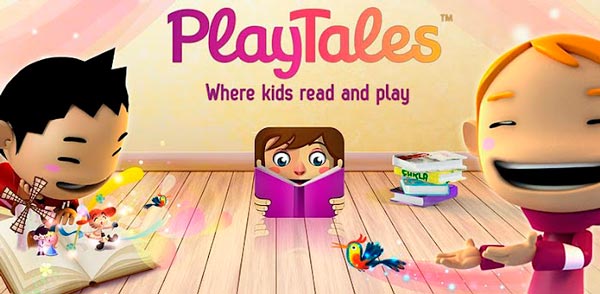
While 80% of the PlayTales library consisted of original in-house titles, the team also partnered with major entertainment and publishing brands, including Zinkia (Pocoyo), Marvel, Turner, HarperCollins, and Disney, the latter commissioning them to create the official interactive storybook for Cars 2.
PlayTales achieved global scale, reaching millions of active users, offering content in over seven languages, and distributing books across more than 120 countries. Among its most successful titles was Momotaro, a well-known classic from Japanese folklore.
Through user analytics, the team soon realized that engagement was heavily concentrated on the interactive mini-games embedded within the stories, prompting a strategic pivot toward full game development. In 2015, Genera Games acquired and fully integrated PlayTales into its structure. Enrique Tapias, who had served as CEO of PlayTales, transitioned to CEO of Genera Games while acquiring a minority equity stake (5%) in the company.
Bravo Games Studio
Perhaps Genera’s most pivotal project was the creation of Bravo Games Studio. The studio was founded in early 2010 as a joint venture between Genera Games and Mobivery, another Seville-based company established in 2008 specializing in smartphone app development. Both founding companies already enjoyed strong brand recognition across the mobile ecosystem.
Bravo Games was created to develop mobile video games for next-generation smartphones and tablets. The goal was to build a high-end line of titles leveraging cutting-edge mobile technologies, such as 3D graphics. As Francisco “Curro” Rueda, CEO of Bravo Games, stated: “Almost everyone has played a console game at some point. What we do is design games that theoretically belong on those home consoles, but we bring them directly to smartphones”.
Bravo Games Studio designed, developed, and published cross-platform mobile and social games for Android, iPhone, iPad, and PSP, supported by a global distribution footprint. In a short period, they carved out a solid position in the market.
Bravo Games’ first original title was Touch Racing Nitro, a racing game that required designing a novel control scheme for steering, acceleration, and braking. The team came up with a gesture-based control system on the screen relative to the car’s position, an input mechanic that was later adopted by numerous other titles in the genre. Touch Racing Nitro reached the #1 overall spot in its category on the Apple App Store, with the Android version launching shortly thereafter.
To put their growth into perspective, within its first two years of operation, the studio launched 14 titles that surpassed 7 million cumulative downloads. Several of these games topped category charts and earned featured placements from major digital storefronts, including Apple’s App Store and Google Play. At the time, the studio operated with a core team of 13 employees.

To expand its catalog, the studio secured licensing partnerships with entertainment giants such as Cartoon Network, Disney, DreamWorks, Marvel, Paramount, and THQ. Following their initial success, they released an extensive lineup of games, including RunBot, R.I.P. Rally, Xtreme Wheels, Touch Racing, Kung Fu Panda 2, Daredevil Rider, Volcano Escape, Push the Zombie, Retro Sports, Penalty Championship, Whack Mania, Celebrity Bodyguard, The Powerpuff Girls, GemWars, and Guess the Sketch. Unsurprisingly, total download metrics surged.
While headquartered in Seville (Spain), the company expanded internationally with satellite offices in Romania and London. The Romanian studio specialized in sports-related titles, while the London branch led business development, product marketing, and global public relations.
Despite these achievements and exceeding initial growth projections, Bravo Games Studio was dissolved in December 2014, with its operations fully integrated into Genera Games. Curro Rueda, who had served as CEO of Bravo Games, transitioned to CTO of Genera Games.
Genera Indie Games
By 2014, Genera noticed a growing stream of talented independent developers reaching out to present prospective game concepts. Since internal resources were already fully committed, Genera could not directly produce these external titles. Instead, leadership realized they could bridge these developers’ commercial and market gaps, helping them bring their own ideas to life. The core philosophy was clear: teach them how to fish rather than give them fish.
After highly encouraging early trials, they officially launched Genera Indie Games in 2017, a dedicated mobile game incubator designed to mentor and empower independent creators. Genera provided hands-on advisory services, aligning scope and expectations with each team’s operational bandwidth.
If an initial project proved successful, Genera proposed forming a joint venture to establish a sustainable development studio. This model allowed developers to focus exclusively on game design and production, while Genera handled data analytics, performance marketing, and corporate management support.
Under this setup, studios that achieved major commercial success could eventually build out their own internal marketing and analytics capabilities, eventually spinning off into fully independent entities.
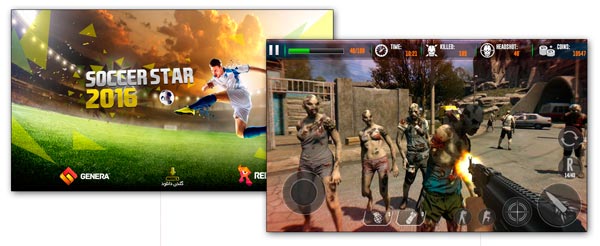
This incubator program birthed successful titles such as Soccer Star 2016 and Z Hunter. The former, created by two young developers from Málaga (Spain), generated over €1 million in its first year and evolved into Redvel Games, a full-fledged studio employing nine people. The latter, Z Hunter, was built by a solo developer, surpassed €1.5 million in revenue, and expanded its studio (aptly named One Man Band) with five new hires. Other notable successful studios included Level App (creators of Ramboat) and JoyCo Games (creators of KingCraft).
Genera’s joint venture ecosystem eventually scaled to over 50 team members. Curro Rueda Álvarez led these operations as CEO of Genera Indie Games from its inception. In November 2020, Genera Indie Games SL was officially rebranded as Viva Games SL.
Genera Games Achievements
Genera Games grew year after year to reach nearly 200 employees across its offices in Seville, Málaga, the United States, and Romania. Its games have accumulated over 250 million total downloads. Furthermore, its global reach positioned North America as its primary market, enabling strategic licensing deals with media giants such as Paramount and Disney. These partnerships allowed Genera to leverage world-class IPs to launch blockbuster titles like Frozen and Star Wars.
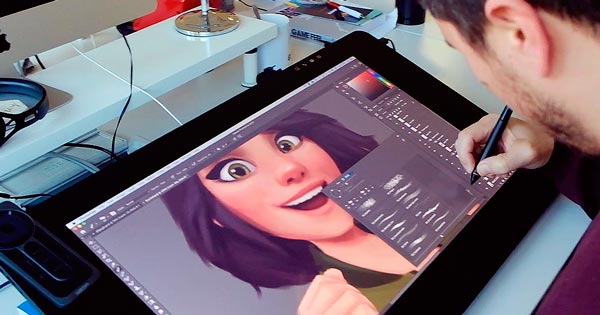
Genera Games reached a scale that enabled soft-launch testing in select geographical markets prior to a worldwide release. This strategy allowed the studio to gather live data and feedback from early cohorts of around 10,000 users, optimizing mechanics and monetization before the global launch.
The mobile gaming market has evolved significantly. When a game achieves traction, it transitions from a static product into a live service model (Games as a Service), requiring a continuous stream of fresh content. For instance, Frozen Free Fall received content updates every three weeks, requiring a dedicated live-ops team that expanded over time. The primary advantage of the service model is that it dramatically extends a title’s player lifetime value and overall lifespan for years.
In 2019, Genera Games recorded revenues of €17.5 million, marking a 13% year-over-year growth compared to 2018. During this period, the company made a massive leap, establishing itself as an industry powerhouse in the puzzle genre, specifically within match-3 mechanics. This positioning led to co-developments with global titans such as Hasbro, Mattel, Paramount, Disney, Lucasfilm, and DreamWorks, alongside successful proprietary IPs like Gladiator Heroes, in addition to its indie developer incubator wins.

To put Genera Games’ success story into perspective: out of approximately 100,000 game development studios worldwide, Genera Games ranked #75 globally in 2017. This comes in an ecosystem where 1,000 to 2,000 new mobile applications are published daily across platforms like Google Play and the Apple App Store. Within Spain, Genera Games ranked first in total downloads and second in overall revenue.
In April 2020, Genera Games released its latest hit: Tuscany Villa. In this narrative-driven puzzle game, players complete match-3 levels to renovate, design, and decorate a family-owned villa turned boutique hotel. The game surpassed 3 million downloads within its first few months.
Genera Games’ executive leadership team has remained involved in the project since José Miguel López founded it at the turn of the century. Notable figures include María Jesús Piñas Azpitarte (Head of Finance), Enrique Tapias (PlayTales co-founder and long-standing CEO of Genera Games), and Curro Rueda (CEO of Bravo Games and Genera Indie Games).
Remarkably, another major milestone for Genera Games is that it has maintained financial independence, operating with zero bank debt and without external venture capital or investment groups on its cap table.
The Acquisition of Genera Games by Scopely
Scopely is one of the world’s leading mobile gaming companies. Founded in Los Angeles (United States) in 2011, the company generated approximately €750 million in revenue in 2020, standing out as one of the fastest-growing companies in the industry in recent years. In addition to running internal development studios, Scopely acts as a publisher, partnering with third-party studios to distribute games globally. By 2020, the company achieved a valuation close to €2.5 billion.
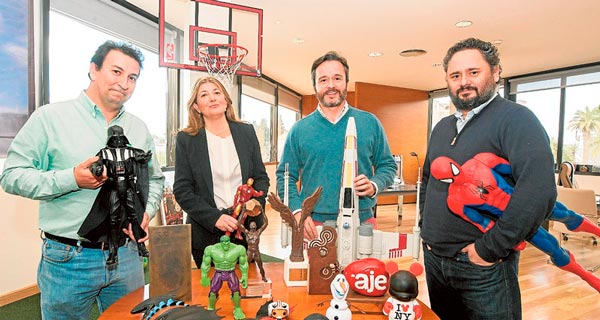
For avid mobile gamers, titles such as MARVEL Strike Force, The Walking Dead: Road to Survival, or Looney Tunes World of Mayhem will sound familiar. Its blockbuster hit, MARVEL Strike Force, generated €250 million in revenue in 2020 alone.
Scopely’s Co-CEO is Spanish executive Javier Ferreira. The publisher had previously established an operational hub in Barcelona in 2017. Elsewhere in Europe, Scopely acquired Irish studio Digit Game Studios in 2019, known for its mobile strategy game Star Trek Fleet Command, followed by the acquisitions of UK-based studios Pixel Toys and Tag Games in 2020.
Genera Games’ deep specialization in the puzzle genre (specifically match-3 mechanics) put the company directly on Scopely’s radar. Genera Games was not only the leading game developer in Spain, but also a global market leader in mobile match-3 puzzle titles. Beyond its widely recognized success with Frozen Free Fall, its internal studio Genjoy had launched Tuscany Villa in April 2020, which quickly accumulated millions of downloads.
Although López had previously turned down a €45 million acquisition offer from Disney years earlier, Scopely’s proposal proved irresistible. In October 2020, Scopely acquired 100% of Genera Games and its Genjoy studio. Genera Indie Games was excluded from the deal and subsequently rebranded as Viva Games SL. The financial terms of the transaction were not disclosed.
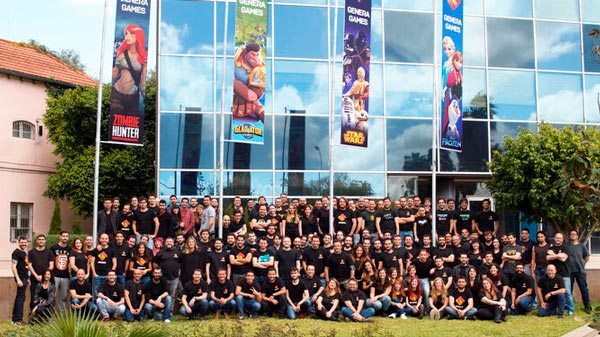
Following the acquisition, the Seville-based company was integrated into Scopely’s global studio network under the Genjoy brand. Enrique Tapias remained as CEO of Genera Games, while its principal shareholders, José Miguel López and his wife María Jesús Piñas, exited the company.
Scopely currently employs around 1,000 people globally, with operational hubs across the United States, Spain, the United Kingdom, Ireland, and Japan.
According to Scopely Co-CEO Javier Ferreira: “The Genjoy team represents the best in class for puzzle and Match-3 games, a genre where we see massive growth opportunities”.
Further Reading
This article has provided a summary of the story behind Genera Games, a Seville-based company that grew into a global benchmark in mobile game development. If you are seeking inspiration or are simply interested in these topics, our blog features a wide range of related content. Please feel free to use the search tool located in the website header.
Additionally, here are a few other articles that might interest you: