
Brothers Alejandro and Pablo Sánchez were two young professionals living in Málaga, Spain. One was a photographer, while the other had completed a vocational training degree in computer science. However, they possessed a distinct vision. They successfully identified a market opportunity that others had overlooked, surrounded themselves with the right talent, and, through rigorous dedication and strategic expertise, managed to build a global enterprise that today serves as a benchmark for designers, illustrators, and creative professionals worldwide. The following is the Freepik Story: a true milestone in entrepreneurship.
In the fast-paced world of business, few cases are as inspiring as that of Freepik. Founded in 2010 by the Sánchez brothers alongside their partner Joaquín Cuenca, the company has left a significant mark on the graphic design and online visual resources industry. Their achievement is particularly noteworthy given that they built this enterprise entirely through bootstrapping, relying on their own modest savings without any external investment. This is, without a doubt, a narrative driven by passion, vision, and the determination of individuals dedicated to excellence in their craft.
Freepik has evolved into a leading platform, offering an extensive collection of high-quality images, vectors, icons, and templates. The pillars of its success lie in the innovative spirit of its founders and their ability to differentiate the brand within a highly competitive market.
From the initial conception of the idea to its international expansion and the creation of vertical business units such as Flaticon and Slidesgo, this article explores the key milestones that defined their path to corporate achievement. It is a journey rich in valuable insights and strategies capable of inspiring future entrepreneurs to pursue their own objectives with unwavering commitment and strategic focus.

The Origins of the Concept
Alejandro Sánchez Blanes was born in Málaga, Spain. Like many young professionals, he pursued vocational training, earning an advanced degree in computer applications development. Demonstrating the proactive mindset common among software developers, he continued his education independently as a self-taught programmer. He generated his initial revenue by executing freelance web development projects.
Pablo Sánchez Blanes is Alejandro’s older brother. Driven by a passion for photography, Pablo worked alongside their father, José Sánchez Ponce (known professionally as Pepe Ponce), a prominent photographer based in Málaga. Together, they possessed a vast archive of thousands of uncatalogued photographs and negatives. They realized that by digitizing these assets, they could establish a commercial stock imagery library. Pablo undertook the initiative, manually digitizing over two thousand images per month. With Alejandro’s technical support, they launched a stock photography service, Photaki.com, in January 2008. The platform sold these digitized assets to designers and illustrators; however, it remained a secondary venture that generated modest revenue.
Shortly thereafter, in September 2008, Manuel Heredia, a colleague of Alejandro, invited him to partner in a sports data venture named resultados-futbol.com (football results dot com). Under the agreement, Heredia retained a 75% equity stake, while Alejandro received a 25% stake in exchange for managing the entirety of the platform’s graphic and user interface design. Although Alejandro exited the project a short time later, his foundational contributions were instrumental in transforming the web service into BeSoccer.com, which has since become a global benchmark for international football statistics and scores.
Meanwhile, Alejandro continued developing his web projects, a process that required him to constantly search the internet for free vector images. At the time, such resources were primarily hosted on independent blogs that offered complimentary content monetized through advertising. Consequently, sourcing the necessary graphics was a time-consuming process that required navigating through an extensive list of individual websites.
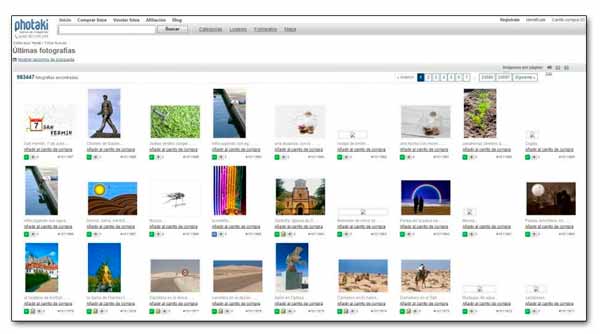
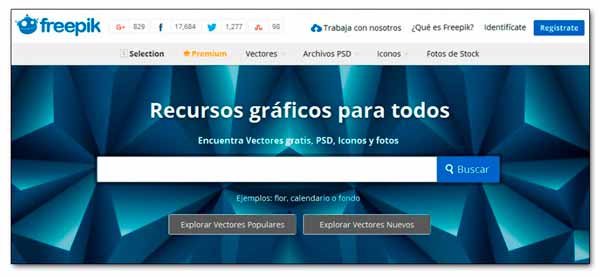
To optimize this process, Alejandro conceived the idea of developing an automated web crawler designed to scan targeted blogs and catalog discovered free graphic resources into a centralized database. This initiative resulted in a comprehensive repository of indexed design assets. The tool proved highly effective for his internal workflows, which prompted him to develop a public-facing website to host the database. The initial launch carried no commercial ambitions beyond ensuring remote access to the data from any location. The platform featured a rudimentary design with minimal emphasis on user experience, yet it was fully functional.
Years later, Alejandro reflected on this period in an interview with the Málaga-based newspaper Diario Sur: “To find a reasonably high-quality image that was free, I had to visit dozens of pages and blogs. Therefore, I decided to design a search engine that would automate that task for me“.
The Birth of Freepik
That basic, free website quickly began attracting a growing user base. It became clear that Alejandro was not the only professional facing this challenge; within just one month of its launch, the platform surpassed 100,000 users. As web traffic steadily increased, it significantly outperformed their proprietary stock imagery service, Photaki.com. Alejandro and Pablo recognized that this high-demand tool represented a substantial commercial opportunity, one capable of generating far greater revenue than selling their own archived photographs.
At the time, Getty Images was one of the prominent industry leaders. The company commercialized its digital catalog by selling individual non-exclusive licenses for approximately €30 to €40 per image. Because creative professionals, such as marketing specialists, web developers, and illustrators, had traditionally been required to commission bespoke assets from photographers or design agencies, these emerging online marketplaces generated substantial interest.
Initially, the founders considered adopting a business model similar to that of Getty Images. They began producing custom digital illustrations and offering them in their catalog at comparable price points for non-exclusive use. They focused their initial efforts on designing thematic graphic assets, such as holiday greetings and event invitations, which generated the company’s first revenue streams.
Concluding that this standalone model lacked long-term scalability, they decided to simultaneously continue indexing third-party content. They maintained and expanded their database, which directed users to the external sources where free assets could be downloaded. The platform operated as a specialized search engine: users searched for assets on Freepik but downloaded the files directly from the third-party host websites. At this stage, the search service remained entirely free and did not generate direct revenue.

Technically, the automated algorithms and tools utilized to extract data from external websites are known as web scraping. In this ecosystem, web crawlers actively browse the internet to discover pages, while scrapers extract the specific data from each site. These two technologies complement each other and are widely used by modern search engines, price comparison platforms, market research firms, and lead generation tools.
Joaquín Cuenca Joins the Venture
Joaquín Cuenca Abela, a software engineer and designer from Málaga, was seeking a new venture around that time. He was already a well-known figure in the technology ecosystem due to a succession of entrepreneurial successes. In 2002, Cuenca had assisted Ubaldo Huerta in launching Loquo, a classified advertisements platform that was subsequently acquired by eBay in 2005. Following this exit, he partnered with software engineer Eduardo Manchón to establish Panoramio in 2005. This platform enabled Google Earth users to upload and share geolocated photographs. The user community expanded rapidly, leading to the acquisition of Panoramio by Google in 2007. Cuenca continued to manage the project under Google’s ownership until 2010.
Given this track record, it was natural for the Sánchez Blanes brothers to identify Cuenca as a strategic partner for Freepik. They recognized that he could provide critical support not only with infrastructure, architecture, and backend development (including programming, indexing, and scraping) but also contribute the corporate management expertise they currently lacked. The brothers offered Cuenca a 5% equity stake in the company in exchange for his technical and strategic collaboration to advance the project.
Freepik was officially incorporated as a company in 2010. Alejandro served as the primary visionary behind the concept, which was brought to fruition alongside Pablo and Joaquín. At the time of inception, Alejandro and Pablo were 26 and 32 years old, respectively. Sometime later, Joaquín became actively involved in the development and scaling of the project. The three founders remained the exclusive shareholders of the company until its eventual sale, with Cuenca holding a minority interest. Freepik stands as a prime example of bootstrapping, a business model where an enterprise achieves growth using its own revenue and internal resources, without relying on external venture capital.
Regarding corporate branding, the name Freepik is derived from the words free and pick. The brand identity was designed to communicate that the platform delivers high-quality graphic resources at no cost, allowing users to select the assets that best align with their creative requirements.
Reflecting on the early stages of the company, Cuenca later stated: “The most critical factor at the beginning is having a flexible team that complements each other well. I can manage backend development and assist with basic front-end HTML. Alejandro handles design, project management, and programming simultaneously, while Pablo manages photography and core business operations“.
Evolution of the Freepik Business Model
In its infancy, Freepik maintained the model originally established by the founding brothers: a comprehensive repository indexing the location of graphic assets, including illustrations and photographs. Corporate revenue was generated primarily through programmatic advertising integrated into the platform.
However, the fact that users discovered assets on Freepik but were forced to download them from third-party websites presented a major operational disadvantage: the company could not control the end-to-end user experience. External platforms enforced their own usage policies; for instance, many required user registration which subsequently led to spam. Furthermore, these external sites operated in various languages, including Chinese, creating an insurmountable barrier for the average professional seeking to download a specific asset.
Another critical vulnerability was the business’s dependence on third-party ecosystems. At one point, two-thirds of Freepik’s indexed content originated from a single external website. Unexpectedly, this provider requested that Freepik cease indexing their assets. Fortunately, the graphics from that specific source were of lower quality and not highly requested; nevertheless, the incident served as a strategic wake-up call. The company needed to eliminate external dependencies.
In 2012, the management team concluded that the most viable solution to mitigate this risk was to transition toward proprietary content production. Having accumulated substantial data, they understood precisely what types of assets were in high demand. They initially commissioned freelance designers and later complemented them with an in-house creative team. These professionals focused on developing graphic assets with proven market viability, beginning with illustrations and icons before eventually expanding into photography.
To differentiate themselves from established market incumbents such as Getty Images or Shutterstock, the founders decided to adopt a disruptive approach: offering high-quality assets entirely free of charge, supported by advertising revenue. To maximize returns on this model, Alejandro devised an innovative strategy: requiring users, many of whom were web designers, to attribute the author by embedding a backlink to Freepik.com. While compliance was not universal, this requirement dramatically optimized the company’s Search Engine Optimization (SEO). Consequently, referral traffic to Freepik grew exponentially, accelerating revenue growth.
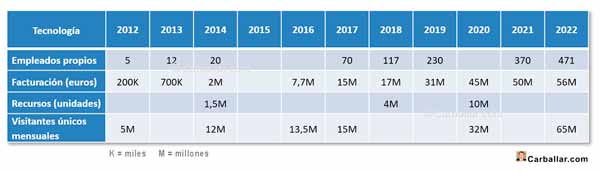
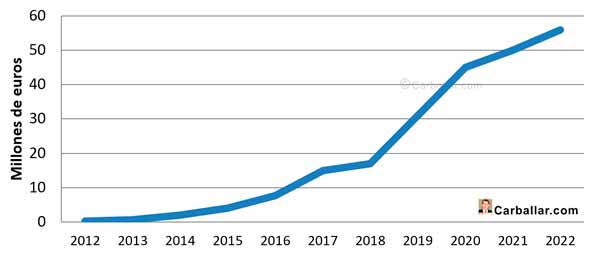
This exponential growth caught the attention of Shutterstock, the global market leader in stock imagery. The two companies entered into an affiliate marketing agreement, whereby Shutterstock compensated Freepik for outbound referral traffic. This partnership became a significant revenue driver during Freepik’s early stages. By the end of 2012, the company achieved annual revenues of approximately €200,000 and expanded its workforce to five employees.
Strategically, SEO (Search Engine Optimization) encompasses the technical frameworks and methodologies deployed to secure high visibility and organic traffic via search engines. Alejandro proved to be exceptionally skilled in SEO architecture, and it was his vision that shaped this foundational acquisition strategy.
The Subscription Model
It became evident that the strategic path forward required transitioning away from third-party indexing and focusing exclusively on proprietary content. The objective was to aggressively expand both the volume and the quality of their asset catalog. However, the stock imagery market was highly mature, meaning that the only viable path to expansion was capturing market share from entrenched competitors like Shutterstock and Getty Images. Freepik required a model that would accelerate this growth.
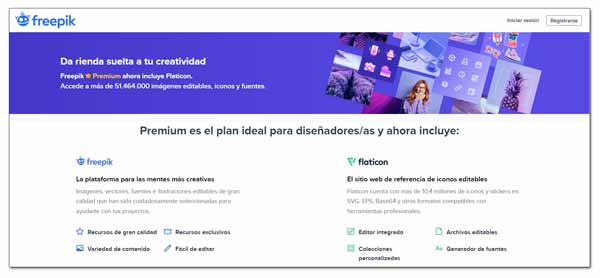
While competitors maintained a pay-per-download pricing structure, Freepik concluded that the optimal way to sustain its complimentary offering while scaling corporate revenue was to adopt a freemium business model. Under this framework, a substantial portion of the catalog remained accessible at no cost (free), while an exclusive, high-tier selection was placed behind a paywall (premium). Initially, the inventory was partitioned into 80% free content and 20% premium subscription content.
This strategy disrupted industry standards by introducing a novel alternative that rapidly captured the attention of a diverse demographic, ranging from creative professionals to casual, occasional users. Consequently, web traffic experienced exponential growth. For millions of users globally who required visual assets only sporadically, or who lacked the budget for traditional licensing, Freepik became an indispensable resource. This shift provided Freepik with a dual monetization engine: a growing base of recurring premium subscribers alongside a massive volume of traffic that maximized programmatic advertising revenue.
As a result, Freepik successfully solidified its competitive positioning within the global design community.
The Creation of a Content Marketplace
The incremental revenue generated through premium subscriptions was systematically reinvested into proprietary content creation. Management recognized that the global demand for novel visual assets was accelerating exponentially. Furthermore, serving a highly diverse international clientele required localized, culturally authentic designs. For instance, a graphic designer in Japan requires illustrations or photography that reflect Japanese cultural nuances rather than standardized Western imagery. This underscored the strategic necessity of sourcing localized content with a global aesthetic.
Additionally, visual assets are subject to rapid obsolescence. A professional sourcing an image of a smartphone requires contemporary device models rather than legacy technology. This principle extends beyond technology to fashion, urban landscapes, and lifestyle content, necessitating a continuous influx of new creative assets.
According to Cuenca, while photography demands local photographers to capture regional authenticity, illustrations and icons possess a more universal appeal. Graphic illustrations developed in Málaga, for example, remain highly scalable and globally viable, as they are less constrained by localized physical details than photographic media.
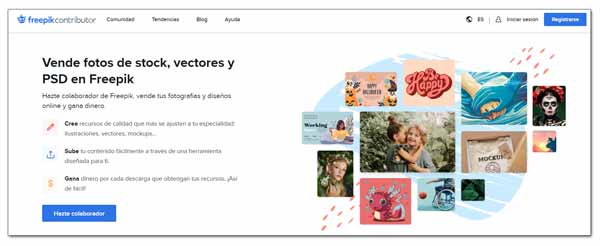
To scale operations and address these requirements, Freepik established a digital marketplace, an online platform acting as an intermediary between independent creators and global corporate clients. Under this infrastructure, creators worldwide upload their portfolios to Freepik and receive compensation indexed to the volume of user downloads.
While the industry standard typically allocates approximately 25% of licensing revenue to creators, Freepik implemented a disruptive 50/50 revenue-share model. Consequently, their network of external contributors has grown consistently. To safeguard brand integrity, Freepik subjects every submission to a rigorous quality assurance framework, verifying both technical standards and copyright originality. Today, external marketplace downloads account for approximately half of Freepik’s total volume, while the remaining half comprises proprietary in-house creations.
Ultimately, this extensive catalog of exclusive, high-quality assets has become Freepik’s primary competitive advantage and differentiator within the global market.
The Launch of Flaticon
In its initial phase, Freepik focused primarily on delivering an extensive catalog of illustrations, which were the preferred assets for design professionals. Furthermore, they provided these graphics in multiple file formats, ranging from standard JPEGs to industry-specific extensions such as CorelDRAW’s CDR, Adobe Illustrator’s AI, and Adobe Photoshop’s PSD.
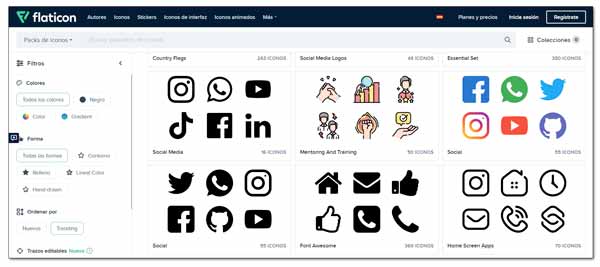
Over time, analytics revealed a substantial market demand for icons. Icons are minimalist graphical representations of objects or concepts widely deployed in web services and software applications to identify functions, programs, files, or hardware devices. Icons specifically designed to convey emotions are categorized as emoticons. Despite their apparent simplicity, engineering high-quality iconography requires significant technical skill, particularly because each design project demands a unified scale and aesthetic consistency across the entire asset set.
Consequently, icons became an essential component in digital design workflows. Sourcing a sufficient variety of high-quality iconography, however, remained a persistent operational challenge for developers. To address this market gap, the founders launched Flaticon in 2013 as a natural strategic extension of their core business. Within six months of its market debut, Flaticon surpassed 8 million page views.
Flaticon offers a comprehensive ecosystem of both free and premium vector icons, developed by industry professionals and organized by thematic categories. This infrastructure allows users to seamlessly search, select, and download assets tailored to their creative and technical specifications.
The platform achieved significant commercial success, rapidly establishing itself as the industry benchmark for sifting and downloading high-quality vector icons.
The Creation of Slidesgo
The strategic development behind the launch of Slidesgo mirrored the trajectory of Flaticon. Freepik possessed comprehensive analytics and data insights regarding user demand. In 2018, market data revealed a significant and growing demand for presentation templates. Consequently, management launched Slidesgo.com that same year. In corporate communication, a “slide” refers to the individual pages or views that comprise a presentation layout within Microsoft PowerPoint, Google Slides, or similar presentation software.
Slidesgo operates as a specialized platform delivering professional, creatively designed presentation templates. These assets are pre-formatted and fully compatible with Microsoft PowerPoint and alternative platforms such as Google Slides. The service targets professionals who require highly impactful and effective presentation materials but may lack the time or design expertise to develop them from scratch. To ensure strict quality control and brand consistency, all templates hosted on Slidesgo are produced exclusively by the company’s in-house design team.
Consistently following the pattern established by Flaticon, Slidesgo achieved rapid commercial success. These initiatives, alongside adjacent ventures such as Tutpad (a platform dedicated to design courses and tutorials), effectively complemented Freepik’s core product ecosystem and significantly accelerated its corporate growth.
Operational Architecture and Sourcing Model
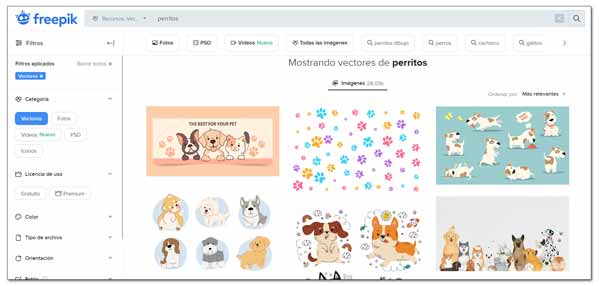
As established, Freepik operates as a digital platform where users source high-quality graphic content to execute their design workflows. It serves as an optimal repository for sourcing original assets for corporate websites, marketing brochures, publishing illustrations, or commercial holiday campaigns.
To streamline asset discovery, Freepik integrates a highly advanced search infrastructure. The vast majority of these graphic assets are hosted directly on Freepik’s proprietary servers, ensuring seamless, low-latency downloads. The platform adheres strictly to a freemium commercial model: it provides a vast selection of complimentary assets available for immediate download, alongside exclusive content reserved for premium subscribers.
For casual users who undertake sporadic design tasks, Freepik provides an efficient solution that eliminates the time-consuming process of scanning the open web for unverified graphics. Conversely, for corporate and creative professionals, the premium tier delivers access to an immense, curated repository of high-end assets that dramatically accelerates design production and project delivery.
Freepik’s diverse catalog is continuously refreshed through three primary content streams:
- In-House Design Team: Permanent creative staff employed directly by the corporation. The intellectual property and copyrights of these assets belong exclusively to Freepik.
- Contracted Creative Partners: Freelance professionals commissioned globally by Freepik to develop specific thematic designs based on market data. Freepik acquires these productions outright, retaining full ownership and copyrights.
- External Contributors: Independent creators worldwide who upload their proprietary portfolios to the Freepik marketplace. The original creators retain copyright ownership, and Freepik compensates them via a performance-based royalty model indexed to total downloads. To be onboarded as an authorized contributor, creators must clear a rigorous vetting process that validates both technical quality and copyright legitimacy.
Freepik’s ultimate objective is to provide a comprehensive, high-quality ecosystem that fulfills all creative requirements, eliminating the need for users to leverage competing platforms. To sustain this, the company deploys specialized data analytics teams dedicated to monitoring global search trends, emerging thematic demands, and technical quality standards. This strategic intelligence dictates whether new content is generated through internal production or outsourced to specific marketplace contributors.
Acquisition of Freepik by EQT
Ten years after its inception, Freepik had positioned itself as one of the most visited websites globally and an international benchmark for graphic asset downloads. In terms of web traffic, it outperformed its primary competitors, such as Shutterstock and Getty Images, though not yet in gross revenue. International web analytics platforms, including Alexa Rank (which ceased operations in 2022), placed Freepik among the top 100 most visited websites globally, while alternative matrices like Semrush and Similarweb ranked it within the top 300. Regardless of variations in specific indexing, the platform commanded massive traffic volumes.
Furthermore, in 2017, the Financial Times featured Freepik in its Europe’s Fastest Growing Companies ranking, naming it the fastest-growing European company within the new technology and media sector, and number 23 across all industries. This growth was mirrored in its financial performance: by 2019, the corporate workforce had expanded to approximately 230 employees, generating an annual revenue of €31 million.
According to Cuenca, the operational pillars of their success relied on delivering high-quality content, ensuring an optimized user experience, particularly regarding low-latency response times, and maintaining a rigorously optimized SEO infrastructure.
Unsurprisingly, Freepik began receiving acquisition inquiries just a few years after its launch. In those early stages, Alejandro stated: “We will not sell. We are highly satisfied with the team we have built and want to continue scaling the company“. However, after a decade of intensive operational management, Alejandro and Pablo sought to liquidate a portion of their equity to secure capital reserves, whereas Joaquín preferred to retain his stake.
While the founders aligned on the objective of sustaining corporate growth, they recognized that scaling at a more aggressive pace exceeded their current internal resources and expertise. Consequently, they concluded that partnering with a private equity firm possessed of global scale and expertise in rapid expansion was the optimal path forward.
In early 2020, the company formally initiated a majority-stake sale process, immediately attracting competitive bids from various sectors. Among these, the proposal from investment firm EQT stood out. EQT offered to acquire a majority interest while committing growth capital, specialized executive leadership, and an international network to guarantee the company’s future scaling. Crucially, the agreement stipulated that the founders would retain management control, a decision reinforced by strong strategic alignment between the executive teams of both Freepik and EQT.
In May 2020, EQT finalized the acquisition of a 53% controlling stake in Freepik for €260 million. Because Joaquín retained his equity, the transaction was executed entirely through the liquidation of shares held by the Sánchez Blanes brothers. As part of the corporate governance agreement, Freepik’s executive management team, including all three co-founders, continued to lead corporate operations.
A cross-border M&A transaction of this scale required sophisticated institutional advisory. EQT was advised by Allen & Overy (legal counsel), Freshfields (tax advisory), Boston Consulting Group (commercial and market diligence), KPMG (financial diligence), LionTree (M&A advisory), and Netlight (technological assessment). Freepik was represented and advised by Drake Star Partners, Deloitte, and Callol, Coca & Asociados.
EQT is a prominent European investment firm (via EQT Mid Market Europe) with a global footprint, managing over €62 billion in capital assets with a portfolio workforce of approximately 160,000 professionals.
Reflecting on the milestone, Alejandro noted: “We will now have access to greater financial and human resources; this marks the point where we can truly extend our global reach“.
What happened to the founders?
The founding brothers have stated on various occasions that Freepik was not originally conceived purely for financial gain, but rather emerged organically from solving a technical challenge. Due to the company’s rapid scaling, they achieved financial independence within a few years of operation; nevertheless, alongside Joaquín, they remained deeply involved in driving corporate expansion. The founders frequently emphasize that one of their most significant milestones is having generated extensive employment opportunities and professional development within the creative sector.
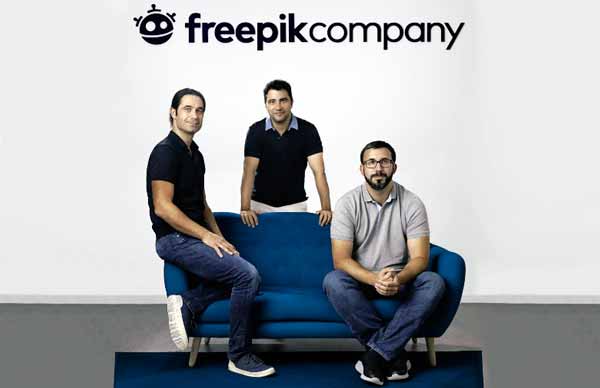
Following the majority-stake sale to EQT, the Sánchez Blanes brothers established a wealth management and investment firm named Blanes Capital. The corporate objective of this entity focuses on real estate asset acquisition, portfolio management, and strategic financial investments. Meanwhile, Joaquín Cuenca transitioned to serve as the Chief Executive Officer (CEO) of Freepik, maintaining operational leadership.
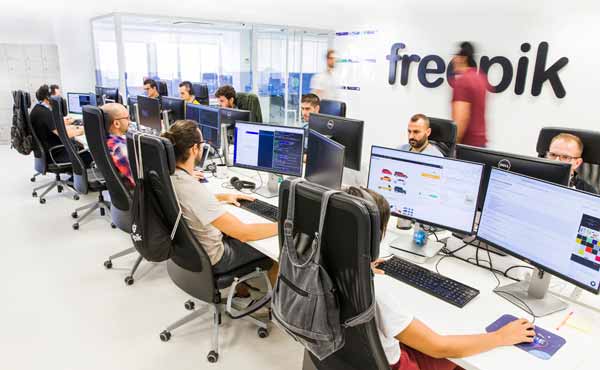
By 2022, Freepik’s global workforce had expanded to 570 professionals across multiple regions, with 470 personnel based in Spain and the remainder stationed across international offices in the United Kingdom, Colombia, and Denmark. The corporate structure includes specialized units dedicated to download analytics, graphic design, content acquisition management, metadata cataloging, and quality assurance frameworks. Additionally, the company collaborates with a network of 500 exclusive external artists and a marketplace community of approximately 11,000 independent contributors. Annual revenues have surpassed €50 million, with Freepik’s core platform driving 60% of total profits, supplemented by Flaticon (20%) and Slidesgo (20%) as critical pillars of the business ecosystem.
In 2023, EQT announced its strategic intention to explore a sale of its majority interest in Freepik, with corporate valuations estimated between €700 million and €1 billion. A complete exit by the remaining founders alongside this transaction would significantly multiply their initial returns. Ultimately, Freepik’s financial trajectory has secured its position within the exclusive tier of Spanish unicorns, a designation reserved for technology startups that achieve a market valuation exceeding €1 billion (109€).
Further Information
This article has summarized the story of Freepik, a global reference in graphic design. I hope you found it insightful. If you are seeking inspiration or are interested in these topics, this blog features a wide array of related content. Please feel free to use the search bar located in the header.
Additionally, here are a few other articles that may be of interest: